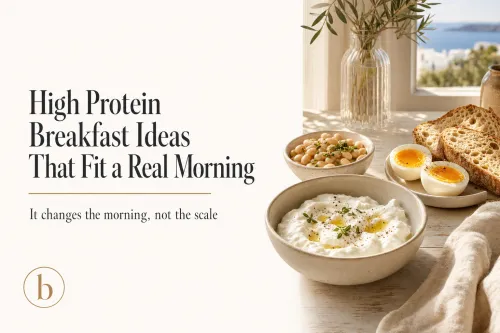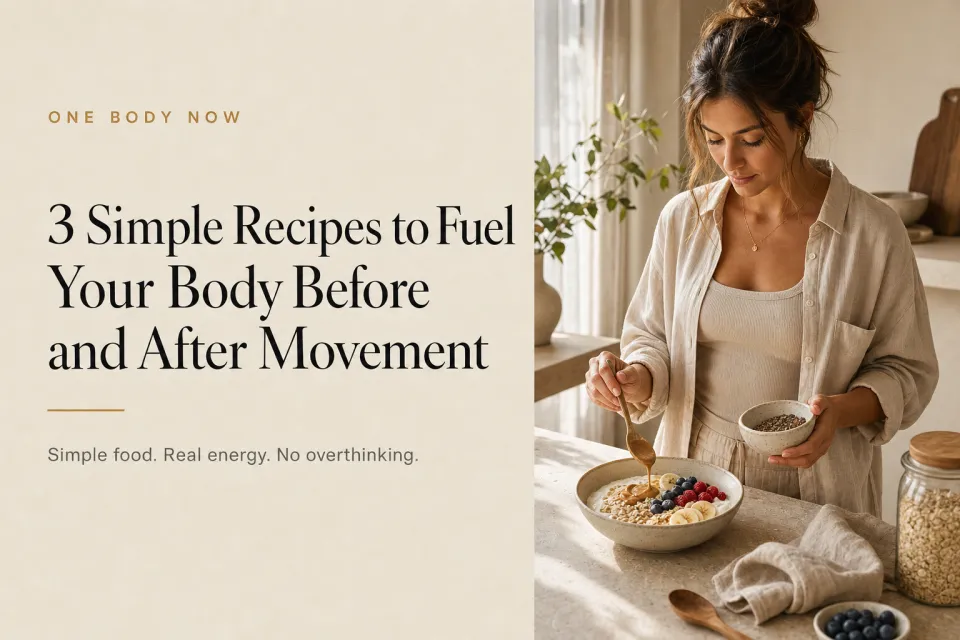
You know the moment. You are standing in the kitchen before a class, a run, a gym session, a walk, or a long day that includes some kind of movement. You feel a little hungry, but you are not sure what will sit well. You open the fridge, close it, open the cupboard, check the time, then wonder if it is easier to eat nothing at all.
Or perhaps movement is already done. You feel that satisfying mix of tired, clear, and hungry, but your energy dips before you decide what to make. Suddenly, the question of food feels bigger than it needs to be. Should it be high protein? Should it be low sugar? Is fruit enough? Is toast too simple? Did you miss a mysterious timing window?
This is exactly why simple, repeatable recipes matter. You do not need a complicated nutrition plan to feel good around movement. You need a few reliable combinations that are easy to prepare, satisfying to eat, and gentle enough to fit real life.
This guide to 3 simple recipes to fuel your body before and after movement is designed for people who want clarity without pressure. No strict rules. No guilt. No dramatic claims. Just warm, practical food ideas you can return to again and again.
In this guide, you will learn:
- Why rigid food rules around movement often backfire.
- How to think about food before and after movement without overcomplicating it.
- Three easy healthy recipes for pre-movement, post-movement, or either moment.
- How to prepare simple food in advance so you are less likely to skip eating.
- A gentle 7-day nutrition framework that supports consistency without becoming a meal plan.
- How to build a calmer, more intuitive relationship with food around active days.
Food is not a reward or a punishment. It is a way to care for the body you live in.One Body Now kitchen note
Think of this as a practical kitchen companion. Whether your movement day is gentle or intense, structured or spontaneous, these nourishing food ideas can help you feel prepared, steady, and supported.
Why Food Around Movement Feels More Complicated Than It Needs To
The question of what to eat before and after a workout can feel surprisingly loaded. For something as natural as feeding your body, there is a lot of noise: timing rules, protein rules, carb rules, social media routines, supplement stacks, and beautifully staged bowls that may or may not fit into an ordinary Tuesday morning.
For many people, this creates two opposite patterns. Some skip food completely because they do not want to get it “wrong.” Others overthink every choice until food becomes another task to manage. Neither approach feels particularly calming, and neither supports a relaxed relationship with eating.
The kitchen hesitation is real
Before movement, hesitation often comes from fear of discomfort. You may have eaten too much before a session in the past and felt heavy. Or you may have eaten nothing and felt flat halfway through. That memory can make every pre-movement snack feel like a calculation.
After movement, hesitation often comes from mixed messages. Some people hear that they must eat immediately. Others hear they should wait. Some feel they have “earned” something. Others feel pressure to choose the “perfect” recovery meal. The result is a cycle of uncertainty.
A more helpful approach is to ask simpler questions:
- Am I hungry now?
- How soon am I moving?
- What usually feels comfortable in my body?
- Do I need something light, or something more substantial?
- What can I prepare without turning this into a project?
Why timing rules can feel stressful
Nutrition research generally supports a few broad principles. Eating something light and easy to digest before movement can help some people feel more comfortable and energised. Eating a satisfying combination of protein and carbohydrates afterward can support recovery and replenishment. But these are flexible guidelines, not rigid commandments.
The exact timing that works for you may depend on your schedule, digestion, appetite, type of movement, stress level, and personal preferences. A short morning walk does not require the same preparation as a long training session. A gentle evening stretch may need no specific snack. A demanding workout after a full workday may feel much better with something simple beforehand.
The goal is not perfection, it is repeatability
The best recipes to fuel your body before and after movement are not necessarily the most impressive. They are the ones you can actually make. They are the ones that do not require ten obscure ingredients, a blender that takes longer to clean than use, or a level of planning that collapses the moment your calendar changes.
Instead of chasing perfect, build a small set of go-to combinations. A banana with yogurt. Toast with egg. Oats with fruit. Rice with salmon. Lentils with vegetables. A smoothie you know sits well. A bowl you can assemble in five minutes.
Simple nutrition for exercise is not about eating the same thing forever. It is about creating a calm foundation, then adjusting based on hunger, energy, appetite, and enjoyment.
Why Strict Food Rules Around Movement Often Backfire
Strict food rules can look useful at first. They promise certainty. They tell you exactly when to eat, what to avoid, and how to measure success. But for many people, especially those balancing work, family, travel, social life, and changing energy levels, rigid rules become another form of pressure.
The issue is not structure itself. Structure can be supportive. The issue is when structure becomes so tight that it disconnects you from your body’s cues. If a plan tells you to eat when you are uncomfortably full, ignore hunger when you are genuinely hungry, or feel guilty for choosing something practical, it is not helping you build a calmer relationship with food.
Rules can turn food into a performance
Many people begin with good intentions. They want better energy, stronger routines, and more consistency. But soon, food becomes something to optimise rather than enjoy. Breakfast is judged. Snacks are second-guessed. Meals are labelled as “good” or “bad.”
This kind of thinking can make nutrition feel distant from daily life. It may also lead to all-or-nothing patterns:
- If you cannot make the perfect pre-movement snack, you eat nothing.
- If you miss your ideal post-movement meal, you feel the day is off track.
- If you eat something enjoyable, you feel you need to compensate later.
- If your routine changes, your nutrition habits disappear completely.
Real life needs more flexibility than that. You need food choices that can move with you, not rules that collapse under pressure.
Intuitive eating recipes can still be practical
Intuitive eating is sometimes misunderstood as eating randomly or without structure. In reality, a more intuitive approach can include planning, preparation, and repeatable meals. The difference is that the plan serves your body, rather than controlling it.
Intuitive eating recipes around movement might follow a simple rhythm:
- Before movement: choose something light, familiar, and comfortable.
- After movement: choose something satisfying, balanced, and enjoyable.
- On busy days: choose the simplest available option rather than skipping food.
- On hungrier days: add more substance without guilt.
- On lighter days: eat according to appetite, not obligation.
This approach is not careless. It is responsive. It recognises that your body is not a spreadsheet. Appetite changes. Energy changes. Sleep, stress, hormones, weather, travel, and workload all influence how food feels.
A realistic example: the office-to-evening-session gap
Imagine Sophie, a People and Culture Director in Paris, who leaves the office at 18:15 for a 19:00 Pilates class. Lunch was hours ago. She feels hungry but does not want anything heavy. If she follows a strict plan that requires a full meal at a specific time, she may feel she has failed before she even starts.
A simple approach works better. She keeps a few pre workout snack ideas in her office drawer or fridge: oatcakes, nut butter, bananas, yogurt, dates, or a small homemade oat cup. She eats something familiar around 45 to 90 minutes before class, drinks water, and moves on with her evening.
No drama. No perfect timing. Just a small act of care.
The best rule is a flexible question
Instead of asking, “What should I be allowed to eat?” ask, “What would help me feel steady, satisfied, and comfortable?”
That one question changes the tone of nutrition. It moves food away from punishment, reward, or performance. It brings it back to support. In the next section, we will turn that mindset into a simple framework you can use before and after movement.
A Simple Nutrition Framework: Light Before, Balanced After
If you remember only one idea from this guide, let it be this: light and easy before, satisfying and balanced after. That is the foundation behind these recipes to fuel your body before and after movement. It is simple enough to remember, flexible enough for real life, and practical enough to repeat.
This framework is not a strict plan. It is a starting point. You can adjust portions, ingredients, and timing depending on your appetite, schedule, and the type of movement you are doing. A slow walk, a strength session, a long cycle, a dance class, and a gentle mobility practice may all ask for slightly different levels of fuel.
Before movement: choose light and familiar
Before movement, many people feel best with something easy to digest. That often means a small combination that includes carbohydrates, gentle texture, and familiar ingredients. Carbohydrates are the body’s accessible energy source during many forms of activity, and choosing them in a simple, enjoyable way can help you feel less depleted.
Examples of light pre workout snack ideas include:
- Banana with a spoonful of yogurt.
- Toast with honey or nut butter.
- Rice cakes with soft cheese and fruit.
- Small bowl of oats with berries.
- Dates with a few almonds.
- A simple smoothie with fruit and yogurt.
The key is comfort. If something feels too heavy, too rich, or too fibrous before you move, save it for later. If something leaves you hungry too quickly, add a little more substance next time.
After movement: bring protein and carbohydrates together
After movement, many people benefit from a more satisfying meal or snack that includes both protein and carbohydrates. This combination can help you feel replenished and steady. Protein foods such as eggs, yogurt, tofu, chicken, fish, beans, lentils, or cheese can sit alongside carbohydrates such as rice, potatoes, bread, oats, quinoa, fruit, or pasta.
You do not need to turn this into macro counting. Think in food groups and simple plates:
- A grain or starchy base.
- A protein-rich food.
- Colour from fruit or vegetables.
- A little fat for flavour and satisfaction.
- Seasoning, herbs, or sauce so the meal feels enjoyable.
This is where post workout meal ideas can become deeply personal. Some people want something warm and savoury. Others prefer something cool and creamy. Some want a full lunch. Others want a substantial snack before dinner. All can work.
Either time: choose flexible combinations
Some foods can work before or after movement, depending on portion and timing. Yogurt bowls, toast, smoothies, simple wraps, and oat jars can all be adjusted. Before movement, keep the portion lighter and the toppings simple. After movement, add more protein, more texture, or a bigger serving.
This is one reason repeatable combinations are so useful. Once you know a food works for your body, you can adapt it instead of starting from scratch every time.
What this looks like in real life
Think of a busy hybrid workday. You have meetings, school drop-off, commuting, messages, and a movement session squeezed between obligations. A perfect nutrition plan is unlikely to survive that day. But a flexible framework can.
- Morning session: eat a banana oat bowl beforehand, then a proper breakfast afterward.
- Lunchtime session: eat a small snack mid-morning, then a balanced lunch after.
- Evening session: eat toast or yogurt late afternoon, then dinner afterward.
- Weekend session: eat according to appetite, with more time to prepare something enjoyable.
This is the essence of simple nutrition for exercise. You are not trying to control every detail. You are creating conditions that make eating easier, calmer, and more consistent.
1. Pre-Movement Recipe: Banana, Oat and Yogurt Energy Bowl
This first recipe is designed for the moment before movement when you want something light, gentle, and quick. It is soft, lightly sweet, and easy to adapt. It works especially well when you have some appetite but do not want a heavy meal.
The combination is intentionally simple: banana for easy energy, oats for gentle substance, yogurt for creaminess, and a little honey or cinnamon for comfort. If you are looking for pre workout snack ideas that feel satisfying without being complicated, this is a reliable place to start.
Why this recipe works before movement
Before movement, the goal is usually comfort. Many people prefer foods that are familiar and not overly rich. This bowl gives you a soft texture and a balanced taste without requiring much preparation. You can make it in five minutes, eat it slowly, and adjust the portion depending on how soon you plan to move.
If you are moving within 30 to 60 minutes, keep it small. If you have more time, make it a little more substantial. If yogurt does not suit you, choose a plant-based alternative you enjoy. The recipe is not about perfection. It is about having one dependable option you do not need to debate.
Ingredients
- 1 ripe banana.
- 3 to 4 tablespoons rolled oats.
- 4 to 5 tablespoons plain Greek yogurt, natural yogurt, or coconut yogurt.
- 1 teaspoon honey or maple syrup, optional.
- A pinch of cinnamon.
- 1 teaspoon chia seeds or ground flaxseed, optional.
- A small splash of milk or plant-based milk, if you prefer a softer texture.
Simple steps
- Mash the banana. Place half or all of the banana in a small bowl and mash it with a fork until soft.
- Add oats and yogurt. Stir in the rolled oats and yogurt. Add a small splash of milk if you want the bowl looser.
- Season gently. Sprinkle with cinnamon and add honey or maple syrup if desired.
- Let it sit briefly. If you have five minutes, let the oats soften before eating.
- Adjust next time. If it felt too light, add more yogurt. If it felt too filling, reduce the oats.
Make it your own
This bowl can be adapted in small ways without losing its simplicity. Add a few berries for freshness, a teaspoon of almond butter for more richness, or swap cinnamon for cocoa powder if you want a more dessert-like flavour. If you are preparing it for a very early morning, mix the oats and yogurt the night before, then add banana in the morning.
For a gentle movement day, a small serving may be enough. For a more intense session, you may prefer a slightly larger bowl or a slice of toast alongside it. The point is to listen, learn, and keep the recipe useful.
Real-world example
Consider a consultant in London who has a short strength class before work. She does not want a full breakfast at 06:30, but she also knows that moving on an empty stomach can leave her distracted. This bowl becomes her five-minute solution. She eats a small portion with coffee or tea, attends class, then has a more substantial breakfast later.
That is how simple food becomes powerful. Not because it is dramatic, but because it removes friction.
2. Post-Movement Recipe: Warm Rice Bowl with Eggs, Greens and Avocado
After movement, many people want something more substantial. This warm rice bowl is designed as a satisfying post-movement meal that brings together carbohydrates, protein, colour, healthy fats, and flavour. It is simple enough for a weekday lunch, but polished enough to feel like something you would order in a calm café.
If you are searching for post workout meal ideas that feel nourishing without becoming strict or complicated, this bowl is a strong template. It is built from everyday ingredients and can be adapted for different diets, schedules, and appetites.
Why this recipe works after movement
After activity, a combination of protein and carbohydrates can generally support replenishment and recovery. In this recipe, rice provides a comforting base, eggs offer protein and richness, greens add freshness, and avocado brings satisfaction and texture.
The bowl is also flexible. You can use leftover rice, microwave rice, quinoa, roasted potatoes, or sourdough toast as the base. You can replace eggs with tofu, salmon, chicken, lentils, or beans. You can keep it warm, make it room temperature, or pack it for the office.
This is the type of easy healthy recipe that becomes easier each time you make it. Once you understand the structure, you can change the ingredients according to what you have.
Ingredients
- 1 bowl cooked rice, brown rice, basmati rice, jasmine rice, or leftover rice.
- 2 eggs, boiled, poached, fried, or scrambled.
- 1 large handful spinach, rocket, kale, or mixed greens.
- Half an avocado, sliced.
- 1 tablespoon olive oil.
- 1 teaspoon lemon juice or lime juice.
- Sea salt and black pepper.
- Optional toppings: sesame seeds, chilli flakes, fresh herbs, cucumber, cherry tomatoes, kimchi, or a spoonful of yogurt sauce.
Simple steps
- Warm the rice. Heat cooked rice in a pan or microwave until warm. Add a small splash of water if needed.
- Cook the eggs. Prepare the eggs in your preferred way. Boiled eggs are practical for meal prep, while scrambled or fried eggs feel more comforting.
- Add the greens. Stir spinach or kale into the warm rice for one minute, or place fresh greens directly in the bowl.
- Build the bowl. Add rice and greens to a bowl, then top with eggs and avocado.
- Finish with flavour. Drizzle with olive oil and lemon juice. Season with salt, pepper, and any toppings you enjoy.
Make it your own
This bowl can travel across cuisines with small changes. Add soy sauce, sesame oil, and cucumber for a Japanese-inspired version. Add feta, herbs, tomato, and lemon for a Mediterranean feel. Add black beans, salsa, and lime for a heartier bowl.
If you prefer plant-based meals, swap eggs for tofu, tempeh, chickpeas, or lentils. If you want more crunch, add seeds or toasted nuts. If you want more colour, add roasted carrots, peppers, courgette, or beetroot.
Real-world example
A Barcelona-based creative director finishes a lunchtime session and has a full afternoon of client calls. If she delays eating, she becomes unfocused by 15:00. Instead of relying on whatever is available nearby, she prepares rice the night before and keeps boiled eggs in the fridge. After movement, the bowl takes less than ten minutes to assemble.
The result is not a strict recovery protocol. It is a steady, satisfying lunch that helps her return to work feeling grounded.
Why warmth matters
There is also something emotionally satisfying about warm food after physical effort. It signals care. It slows you down. It makes eating feel like a transition rather than an afterthought. That matters because a calmer relationship with food is built through repeated experiences of trust, not through perfect meals.
3. Flexible Recipe: Sourdough Toast with Ricotta, Berries and Seeds
This third recipe works before or after movement, depending on how you portion it. Before movement, keep it simple: one slice of toast, a light layer of ricotta, and a few berries. After movement, make it more substantial: two slices, more ricotta, extra seeds, and perhaps a side of yogurt or eggs.
The beauty of this recipe is that it feels elegant while staying very easy. It is also a useful answer to the everyday question of what to eat before and after a workout when you do not want a bowl, smoothie, or full cooked meal.
Why this recipe is flexible
Toast is one of the most underrated nourishing food ideas because it is fast, familiar, and endlessly adaptable. Sourdough or wholegrain bread offers a satisfying base. Ricotta adds creaminess and protein. Berries bring freshness. Seeds add gentle texture and flavour.
It can be eaten slowly at home, made quickly before leaving, or prepared as a snack between meetings. It also feels less “fitness food” and more like real food, which is exactly the point. Food around movement does not need a special identity. It can simply be food that supports you.
Ingredients
- 1 to 2 slices sourdough, rye, or wholegrain bread.
- 2 to 4 tablespoons ricotta, cottage cheese, cream cheese, or a plant-based spread.
- A handful of berries, sliced strawberries, blueberries, raspberries, or blackberries.
- 1 teaspoon pumpkin seeds, hemp seeds, chia seeds, or sesame seeds.
- 1 teaspoon honey, optional.
- A little lemon zest, optional.
- A pinch of sea salt.
Simple steps
- Toast the bread. Toast until golden and crisp at the edges.
- Spread the ricotta. Add a generous or light layer depending on your hunger.
- Add berries. Place berries on top, slicing larger fruit if needed.
- Finish simply. Sprinkle with seeds, a tiny pinch of salt, and honey if desired.
- Adjust the portion. Choose one slice before movement or two slices after movement if you want more substance.
Make it savoury instead
If sweet toast is not your preference, this same framework becomes savoury. Use ricotta or hummus, then add tomato, cucumber, olive oil, herbs, and black pepper. Before movement, keep toppings light. After movement, add a boiled egg, smoked salmon, chickpeas, or tofu for more staying power.
This flexible structure is one of the easiest ways to practise intuitive eating recipes. You begin with a base that works, then ask what your body wants today: sweet, savoury, light, filling, crisp, creamy, warm, fresh.
Real-world example
A Berlin-based founder has unpredictable days. Sometimes she fits movement into the morning, sometimes between calls, sometimes after work. A rigid plan does not help her. A flexible toast formula does. She keeps good bread in the freezer, ricotta in the fridge, and berries or tomatoes available. Within minutes, she can make something appropriate for the moment.
This is where simplicity becomes strategy. The recipe works because it reduces decision fatigue. It gives her a default that still feels pleasurable.
Small upgrades that make it feel premium
Simple food does not have to feel plain. A little lemon zest, a drizzle of good olive oil, toasted seeds, fresh herbs, or a beautiful plate can change the experience. This matters because pleasure supports consistency. When food looks and tastes good, you are more likely to eat with attention rather than rushing through it.
How to Choose the Right Recipe for Your Movement Day
Once you have three reliable recipes, the next question is how to choose between them. The answer depends less on rules and more on context. Your timing, appetite, movement intensity, digestion, and schedule all matter. The same person may need different food on different days, and that is not inconsistency. That is responsiveness.
These recipes to fuel your body before and after movement are designed to give you flexible options, not a fixed script. Think of them as three doors you can walk through depending on what your body and day are asking for.
If you are moving soon
If you plan to move within the next 30 to 60 minutes, choose something light and familiar. The banana, oat and yogurt bowl is ideal if you keep the portion modest. The ricotta toast can also work well, especially as one slice with simple toppings.
Before movement, many people prefer to avoid foods that feel too heavy, too greasy, or too unfamiliar. This does not mean those foods are “bad.” It simply means they may not be comfortable right before activity.
Helpful pre-movement questions:
- How much time do I have before I move?
- Do I feel hungry, lightly hungry, or not hungry at all?
- What has felt comfortable before?
- Am I choosing this because it supports me, or because I think I “should”?
If you have just finished moving
If movement is finished and you feel hungry, choose something more satisfying. The warm rice bowl is designed for this. It offers comfort, texture, and balance without becoming complicated. The toast can also work after movement if you make it more substantial with extra ricotta, seeds, or a side.
Some days, you may want to eat soon after movement. Other days, you may want to shower, commute, or take a few minutes before sitting down. Unless you have specific performance goals or medical needs, there is usually room for flexibility. The important thing is not to let uncertainty turn into skipping food when your body is clearly asking for it.
If your movement was gentle
Gentle movement days do not need to be treated like intense training days. A walk, mobility session, light yoga class, or easy cycle may simply fit into your normal eating rhythm. You might not need a specific snack before or a special meal afterward.
Still, the recipes can be useful. The oat bowl might become breakfast. The rice bowl might become lunch. The toast might become a calming afternoon snack. This is part of building simple nutrition for exercise without making every active moment feel like an event.
If your movement was intense
More intense movement often increases appetite, either immediately or later in the day. A more substantial post-movement meal may feel helpful. That might mean a larger rice bowl, an extra egg, more grains, or an additional snack later.
Rather than judging hunger, observe it. Hunger after demanding movement is not a problem to solve. It is information. Responding with a satisfying meal is a practical act of recovery.
If you are busy or travelling
When routine changes, simplicity becomes even more important. You may not have your usual kitchen, ingredients, or timing. In those moments, use the structure rather than the exact recipe:
- Before: fruit plus yogurt, toast, oats, or a simple bar you enjoy.
- After: rice, bread, potatoes, or grains plus eggs, tofu, fish, chicken, beans, or yogurt.
- Either time: toast, smoothie, oats, or a simple bowl.
The goal is not to recreate perfection on the road. It is to keep feeding yourself in a way that feels steady and respectful.
Preparing Simple Food in Advance to Reduce Decision Fatigue
Decision fatigue is one of the biggest reasons people skip eating around movement. It is not always lack of knowledge. Often, you know enough. You simply do not have the energy to decide, shop, prepare, and clean up at the exact moment your body needs food.
This is why preparation matters. Not rigid meal prep with identical containers unless you enjoy that, but gentle preparation that makes good choices easier. A few ingredients ready in the fridge can transform your week.
Prepare components, not perfect meals
Instead of preparing full meals, prepare components you can combine in different ways. This keeps food flexible and prevents boredom.
Useful components include:
- Cooked rice, quinoa, potatoes, or pasta.
- Boiled eggs.
- Washed greens.
- Chopped cucumber, carrots, or peppers.
- Plain yogurt or plant-based yogurt.
- Fruit that is easy to grab, such as bananas, apples, berries, or oranges.
- Toasted seeds or nuts.
- A simple sauce, such as lemon yogurt, tahini dressing, or olive oil with herbs.
With these ingredients, you can make the oat bowl, rice bowl, or toast quickly. You can also improvise dozens of other easy healthy recipes without starting from zero.
Create a visible fuel shelf
Visibility changes behaviour. If your nourishing options are hidden behind condiments or forgotten in a drawer, you are less likely to use them. Create a “fuel shelf” in your fridge or cupboard with the items you rely on before and after movement.
Your fuel shelf might include:
- Rolled oats.
- Nut butter.
- Honey.
- Rice cakes or crackers.
- Bananas or dried fruit.
- Yogurt.
- Cooked grains.
- Eggs or tofu.
- Seeds and nuts.
This small design choice can reduce the feeling of “there is nothing to eat,” even when you have food available.
Use the two-minute reset
At the end of the day, take two minutes to set yourself up for tomorrow. You do not need to cook a full meal. Simply check what is available.
- Look at your calendar and notice when movement might happen.
- Choose one possible pre-movement option.
- Choose one possible post-movement option.
- Move one ingredient to the front of the fridge or cupboard.
- Place a bowl, spoon, or container where you will see it.
This may sound almost too simple, but it works because it reduces friction. When tomorrow arrives, you are not beginning from a blank page.
A workplace example
In a hybrid team, employees may be moving before work, after work, or during lunch. A company kitchen stocked with simple foods can support better habits without being prescriptive. Think fruit, yogurt, oats, wholegrain bread, eggs, hummus, and easy grains. These are not flashy perks, but they are useful.
For People and Culture leaders, small food environments can shape everyday wellbeing. A premium wellbeing culture is not only built through events. It is also built through the daily cues that make self-care easier.
Preparation is a kindness to your future self
Simple preparation is not about control. It is about care. You are making it easier to respond to hunger, support energy, and avoid the low-effort default of skipping food because deciding feels too hard.
When you prepare lightly, food becomes less reactive. You do not need to wait until you are depleted to begin thinking about nourishment.
A Gentle 7-Day Nutrition Framework, Not a Strict Meal Plan
A strict meal plan can be useful for some people, but many find it too rigid for ordinary life. This 7-day framework is different. It gives you one small nutrition focus each day, designed to help you practise awareness, preparation, and simple fueling without turning food into a project.
Use this as a guide, not a rulebook. You can start on any day. You can repeat a focus. You can skip a day. The goal is to build confidence through small actions.
Day 1: Notice your movement rhythm
Before changing anything, observe. When do you usually move? Morning, lunch, evening, weekends, or whenever life allows? Notice whether you tend to eat before movement, after movement, both, or neither.
Small focus: Write down one moment when food around movement felt easy, and one moment when it felt confusing.
Day 2: Choose one pre-movement default
Select one light option you can rely on when you need energy but not heaviness. It might be the banana, oat and yogurt bowl, one slice of ricotta toast, or fruit with yogurt.
Small focus: Place the ingredients somewhere visible so the choice is easier tomorrow.
Day 3: Choose one post-movement default
Pick one satisfying combination that includes a carbohydrate-rich base and a protein-rich food. The warm rice bowl is a strong example, but you could also choose pasta with tuna, potatoes with eggs, lentils with bread, or yogurt with oats and fruit.
Small focus: Prepare one component in advance, such as cooked rice or boiled eggs.
Day 4: Practise eating without rushing
Even simple food can feel more nourishing when you pause long enough to experience it. This does not require a perfect mindful eating ritual. It can be as simple as sitting down, taking a breath, and noticing the first few bites.
Small focus: Eat one snack or meal without checking your phone for the first five minutes.
Day 5: Add colour
Colour often brings flavour, texture, and variety. Add berries to breakfast, greens to a rice bowl, tomatoes to toast, or fruit alongside a snack. This is not about chasing a perfect plate. It is about making food more appealing and satisfying.
Small focus: Add one fruit or vegetable to a meal you already eat.
Day 6: Make one flexible recipe
Choose the recipe that best fits your day. If you are moving soon, make the oat bowl or one slice of toast. If you moved earlier, make the rice bowl. If plans changed, adapt the recipe instead of abandoning it.
Small focus: Notice what felt good, what felt too much, and what you would change next time.
Day 7: Build your personal fuel list
At the end of the week, make a short list of foods that work for you before and after movement. Keep it realistic. Include foods you actually like and can access.
Small focus: Write three go-to combinations:
- One light pre-movement option.
- One balanced post-movement option.
- One flexible either-time option.
This framework helps you build simple nutrition for exercise through awareness, not pressure. Over time, you will start to trust your own patterns. That trust is more valuable than any perfect plan.
How These Recipes Support a Calmer Relationship With Food
Food around movement can easily become emotional. Some people feel they must “earn” food through activity. Others feel they must “make up for” what they ate by moving more. These ideas are common, but they are not supportive. They can turn both food and movement into transactions rather than acts of care.
The deeper purpose of these recipes to fuel your body before and after movement is not just energy or recovery. It is also calm. A few simple combinations can help remove the moral language from eating. They remind you that food can be practical, pleasurable, and neutral.
Food is not a reward
After movement, it is easy to think, “I earned this.” While the phrase may sound harmless, it can suggest that food requires permission. But your body needs nourishment whether you moved today or not. Movement may influence hunger and food preferences, but it does not determine whether you deserve to eat.
A more supportive phrase might be:
- “I moved, and now I am hungry.”
- “This meal will help me feel steady.”
- “I am allowed to enjoy food without negotiating for it.”
- “I can eat in response to care, not control.”
Food is not a punishment
Before movement, some people skip food because they believe an empty stomach is somehow more disciplined. But if skipping food leaves you distracted, irritable, light on energy, or disconnected from your body, it may not be serving you.
Choosing a small snack before movement is not weakness. It is information applied wisely. You are noticing what helps your body feel better and responding with respect.
Repeatable recipes build trust
Trust grows when you have repeated experiences of your body responding well to care. If you eat a small oat bowl before a session and feel comfortable, you learn something. If a rice bowl after movement keeps you satisfied through the afternoon, you learn something. If ricotta toast works beautifully on busy days, you learn something.
Over time, these experiences become confidence. You no longer need to search for new advice every time. You have a personal library of nourishing food ideas that work for you.
Pleasure matters
Nutrition advice often focuses on function, but pleasure is not an optional extra. Enjoyable food is easier to repeat. Texture, colour, warmth, seasoning, and presentation all influence satisfaction.
This is why a premium approach to everyday nutrition does not have to mean complex recipes. It can mean choosing good bread, ripe fruit, olive oil you enjoy, fresh herbs, a favourite bowl, or a calm place to sit. These details make food feel less like a task and more like a moment of attention.
One small action now
The philosophy behind One Body Now is simple: begin with one action. In nutrition, that action might be preparing oats tonight, boiling eggs for tomorrow, buying berries, or making toast instead of skipping food. Small actions repeated with care can reshape how you relate to eating around active days.
Expert Tips and Pro Strategies for Better Fueling Without Overthinking
Once you have the basics in place, you can refine your approach without making it rigid. These pro strategies are designed for people who already understand that food matters, but want to make their habits smoother, more intuitive, and easier to sustain during busy weeks.
Build a three-level hunger response
Instead of deciding from scratch every time, create three levels of options based on hunger and timing.
- Light: banana, yogurt, one slice of toast, small oat bowl.
- Moderate: yogurt bowl with oats and fruit, two slices of toast, smoothie with yogurt.
- Substantial: rice bowl, eggs with toast, lentil bowl, pasta with protein and vegetables.
This keeps your response flexible. You are not forcing a full meal when you need a snack, or choosing a tiny snack when your body wants lunch.
Use “same structure, different flavour”
Boredom is one reason routines fall apart. Instead of reinventing the meal, keep the structure and change the flavour.
For example, the rice bowl can become:
- Mediterranean with lemon, herbs, feta, cucumber, and olive oil.
- Japanese-inspired with sesame, edamame, soy sauce, and nori.
- Comforting with roasted vegetables, eggs, and yogurt sauce.
- Plant-based with lentils, avocado, and tahini dressing.
This is one of the easiest ways to keep easy healthy recipes interesting while preserving the simplicity that makes them useful.
Pair food decisions with calendar cues
If you know you often move on Tuesday and Thursday evenings, do not wait until 17:45 to think about food. Pair the decision with a calendar cue.
- When you pack your bag, pack a snack.
- When you make coffee, check your post-movement lunch ingredients.
- When you finish dinner, prepare oats or rice for tomorrow.
- When you schedule movement, schedule a food option beside it.
This strategy is especially useful for professionals with demanding calendars. It turns nutrition into part of the rhythm, not another separate task.
Common mistakes to avoid
- Waiting until you are depleted. It is harder to make calm choices when hunger has become urgent.
- Changing everything at once. Start with one recipe, not a full nutrition overhaul.
- Ignoring comfort. A food can be nutritious and still not feel good before movement.
- Removing pleasure. Food that feels joyless is harder to repeat.
- Copying someone else’s routine exactly. Your appetite, schedule, and body are your own.
Helpful kitchen tools
You do not need much equipment, but a few simple tools can make preparation easier:
- Glass containers for cooked grains and chopped ingredients.
- A small non-stick pan for eggs or tofu.
- A good knife and chopping board.
- A toaster or grill pan.
- A few bowls you enjoy eating from.
- A small jar for homemade dressing.
If you want more nutrition-focused reflection and everyday food support, One Meal Now is designed around simple logging, learning, and building clarity one meal at a time.
Step-by-Step Checklist: Build Your Personal Before and After Movement Fuel System
The easiest system is the one you actually use. This checklist will help you turn the recipes in this guide into a personal rhythm that fits your life, appetite, and schedule.
- Choose one pre-movement default.
Pick a light option that feels comfortable. Start with the banana, oat and yogurt bowl or one slice of ricotta toast. Pro tip: keep the ingredients visible. - Choose one post-movement default.
Select a satisfying meal you can repeat. The warm rice bowl is ideal because it uses simple components. Pro tip: cook extra rice or grains when making dinner. - Choose one flexible either-time option.
Use the sourdough toast formula or create your own. Pro tip: adjust portion size instead of changing the whole recipe. - Prepare two ingredients in advance.
Do not overcomplicate prep. Boil eggs, wash greens, cook rice, or portion oats. Pro tip: components are more flexible than full meals. - Create a visible kitchen cue.
Place oats, bananas, bread, yogurt, or seeds where you can see them. Pro tip: the easier it is to notice, the easier it is to use. - Test, then adjust.
After eating before or after movement, notice how you feel. Pro tip: adjust portion, timing, or ingredients gently. Do not judge the experiment. - Keep a short personal list.
Write down three combinations that work. Pro tip: save the list in your phone so you can use it when shopping or travelling.
This is how simple nutrition becomes sustainable. Not through strict control, but through repeatable choices that make care easier.
Conclusion: Simple Food, Real Energy, No Overthinking
You do not need a complicated nutrition plan to feel good around movement. You need a few simple, satisfying combinations that fit your real life. When food becomes easier to choose and prepare, it becomes easier to trust.
The key takeaways:
- Before movement, choose foods that feel light, familiar, and easy to digest.
- After movement, bring together protein, carbohydrates, colour, and satisfaction.
- Flexible recipes are more sustainable than strict rules.
- Preparation reduces decision fatigue and makes eating less reactive.
- Food is not something to earn or correct. It is support.
Start with one recipe from this guide. Make it once. Notice how it feels. Adjust it to your taste, your schedule, and your appetite. That is enough.
Food is not a reward or a punishment. It is fuel, and it can be simple. One Body Now helps you build from there.
If this guide gave you one useful idea, share it with someone who tends to overthink food around movement. A calmer kitchen often begins with one small, generous choice.
Frequently Asked Questions
What should I eat before movement if I do not feel very hungry?
If you do not feel very hungry, keep it light and familiar. A few bites of banana, a small yogurt, one slice of toast, or a small oat bowl may be enough. The goal is not to force food, but to support comfortable energy if your body needs it. Consider how long and intense your movement will be. A short gentle session may not require anything specific, while a longer or more demanding session may feel better with a small snack beforehand.
What is the best food to eat after movement?
There is no single best food after movement, but many people feel good with a satisfying combination of carbohydrates and protein. Think rice with eggs, toast with ricotta, yogurt with oats and fruit, lentils with bread, or potatoes with tofu or fish. Add colour from vegetables or fruit, plus flavour from herbs, olive oil, lemon, spices, or sauce. The best post-movement food is one you enjoy, can prepare realistically, and leaves you feeling steady.
Do I need to eat immediately after movement?
Not always. For most everyday movement, there is usually flexibility. If you are hungry right away, eat. If you prefer to shower, commute, or take a short pause first, that can be fine too. The important point is not to let uncertainty turn into skipping food when your body is asking for nourishment. If your schedule often delays meals, prepare something simple in advance so you have a reliable option ready.
Are these recipes suitable for gentle movement days?
Yes. These recipes can fit gentle movement days, but you may not need to treat them as special fueling moments. A banana oat bowl can simply be breakfast. Ricotta toast can be a snack. A rice bowl can be lunch or dinner. On gentle days, follow appetite and comfort rather than adding unnecessary rules. The recipes are designed to support a flexible rhythm, whether your day includes a walk, light stretching, cycling, strength work, or a more intense session.
Can I use these recipes if I move early in the morning?
Yes. Early mornings often call for simplicity. If a full breakfast feels too much, try a small portion of the banana, oat and yogurt bowl, half a banana, or one slice of toast. You can then eat a more substantial breakfast afterward if you are hungry. Preparing ingredients the night before helps reduce morning decision fatigue. For example, mix oats and yogurt in a bowl, place a banana nearby, and finish it quickly when you wake.
What if eating before movement makes me uncomfortable?
If eating before movement feels uncomfortable, experiment gently. Try a smaller portion, allow more time between eating and moving, or choose softer foods that are easier for you to tolerate. Some people prefer liquid options like smoothies, while others prefer toast or fruit. Avoid making sudden changes before an important session. Use ordinary days to test what works. Comfort is personal, and the best pre-movement snack is one your body accepts well.
Can these recipes work for plant-based eating?
Yes. The recipes are easy to adapt. Use coconut yogurt, soy yogurt, or almond yogurt in the oat bowl. Replace ricotta with a plant-based spread, hummus, or tofu cream. In the rice bowl, swap eggs for tofu, tempeh, lentils, chickpeas, beans, or edamame. The same simple structure applies: choose a base, add a protein-rich plant food, include colour, and finish with flavour. Keep the meal satisfying rather than trying to make it overly restrictive.
Are carbohydrates important before or after movement?
Carbohydrates can be useful around many forms of movement because they provide accessible energy and help create satisfying meals. Before movement, fruit, oats, toast, or rice cakes can feel light and practical. After movement, rice, potatoes, bread, pasta, oats, or fruit can pair well with protein-rich foods. You do not need to count or follow strict numbers. Think in simple food combinations and notice what helps you feel comfortable, energised, and satisfied.
How can I stop overthinking what to eat around exercise?
Start by choosing three defaults: one light option before movement, one balanced option after movement, and one flexible option that works either time. Keep the ingredients visible and repeat them for a week. Overthinking often decreases when you have reliable choices that already work for your body. You can still vary flavours and portions, but you are no longer starting from zero every time. Simplicity builds trust.
What are easy healthy recipes for busy professionals?
Busy professionals often need recipes that rely on components rather than complex cooking. Good options include yogurt bowls with oats and fruit, rice bowls with eggs or tofu, sourdough toast with ricotta or hummus, lentil salads, overnight oats, and simple wraps. Choose foods that can be prepared in under ten minutes or assembled from ingredients made earlier. The goal is practical nourishment that fits between meetings, commuting, family responsibilities, and changing schedules.
Can I prepare these recipes in advance?
Yes. The oat bowl can be partly prepared the night before by mixing oats and yogurt, then adding banana in the morning. The rice bowl becomes much faster if you cook rice and boil eggs ahead of time. Toast is best made fresh, but you can keep bread sliced in the freezer and toppings ready in the fridge. Preparing components gives you flexibility without making your meals feel repetitive or overly planned.
How do I know if a pre-movement snack is right for me?
A good pre-movement snack usually feels comfortable, gives you steady energy, and does not distract you while moving. You should not feel overly full, but you also should not feel depleted if your body needed food. Test snacks on ordinary days and notice patterns. Try changing one thing at a time, such as portion size, timing, or texture. Your body’s feedback is more useful than copying someone else’s routine exactly.
Can I eat the same thing before and after movement?
Yes, in some cases. Flexible foods like toast, yogurt bowls, smoothies, or oats can work before or after movement depending on portion and additions. Before movement, keep the serving lighter and simple. After movement, make it more substantial with extra protein, grains, seeds, fruit, or another side. This is why repeatable recipes are so helpful. You can use the same base and adjust it to the moment instead of creating a new meal every time.
What if I skip eating after movement because I am too busy?
If this happens often, focus on preparation rather than willpower. Keep a post-movement default ready, such as cooked rice, boiled eggs, yogurt, fruit, bread, hummus, or tofu. Pack something if you know you will be away from home. Skipping food may happen occasionally, but if it leaves you tired, distracted, or overly hungry later, your routine may need support. A simple prepared option can make eating feel easier and more automatic.
Are these recipes part of a diet plan?
No. These recipes are not a strict diet plan and they do not require calorie counting, macro tracking, or food rules. They are simple, nourishing food ideas designed to support energy, recovery, and a calmer relationship with eating around movement. You can adapt the ingredients, portions, and timing to your appetite and preferences. The goal is not perfection. The goal is to make feeding yourself feel easier, warmer, and more sustainable.
Expert Quotes for “3 Simple Recipes to Fuel Your Body Before and After Movement”
“Eat food. Not too much. Mostly plants.”- Michael Pollan, author of In Defense of Food
Why it fits: A helpful reminder that simple, whole-food ingredients can be the foundation of both pre- and post-movement meals.
“Exercise is king. Nutrition is queen. Put them together and you’ve got a kingdom.”- Jack LaLanne, fitness pioneer
Why it fits: This quote reinforces the idea that movement and nourishment work best as a pair- especially when fueling before and recovering after activity.
“Take care of your body. It’s the only place you have to live.”- Jim Rohn, author and motivational speaker
Why it fits: Simple recipes that support energy, strength, and recovery are a practical way to care for the body daily.
“Those who think they have no time for healthy eating will sooner or later have to find time for illness.”- Edward Stanley, author
Why it fits: This supports the value of quick, realistic recipes that make healthy fueling easier before and after movement.
Recommended Books on Fueling, Nutrition, and Movement
- Nancy Clark’s Sports Nutrition Guidebook by Nancy Clark, MS, RD
A practical, approachable guide to eating for energy, performance, and recovery. It’s especially useful for understanding what to eat before and after workouts without overcomplicating nutrition. - The Feed Zone Cookbook: Fast and Flavorful Food for Athletes by Biju Thomas and Dr. Allen Lim
This cookbook focuses on simple, real-food meals designed for active people. It includes easy recipes that support training, recovery, and everyday nourishment. - ROAR: How to Match Your Food and Fitness to Your Female Physiology by Dr. Stacy T. Sims with Selene Yeager
A science-based book focused on women’s nutrition, hydration, training, and recovery. It’s helpful for tailoring pre- and post-movement fuel to support hormones, strength, and energy. - The New Rules of Marathon and Half-Marathon Nutrition by Matt Fitzgerald
Although geared toward runners, this book offers useful insights on carbohydrates, protein, hydration, and meal timing that can apply to many types of movement. - Sports Nutrition for Endurance Athletes by Monique Ryan, MS, RD
A detailed guide for active individuals who want to understand how food supports stamina and recovery. It covers fueling strategies before, during, and after exercise. - The Athlete’s Gut: The Inside Science of Digestion, Nutrition, and Stomach Distress by Patrick Wilson, PhD, RD
This book explores how digestion affects performance and comfort during movement. It’s a great resource for choosing pre-workout meals that are energizing but gentle on the stomach.