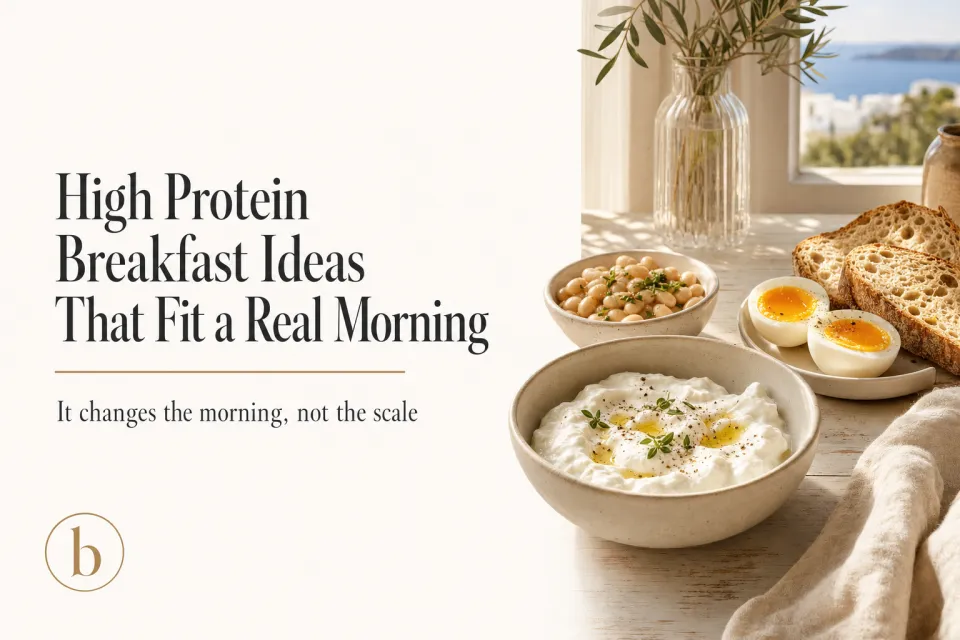
It is 7.40am. You have had coffee, checked messages, found the clean shirt, answered one thing that could not wait, and eaten nothing. You already know 11am will be difficult: the slight shakiness, the distracted scrolling, the sharp edge in your mood, the sudden need for something sweet before lunch has even appeared.
This is where high protein breakfast ideas become useful, not because breakfast has to be perfect, but because the first meal often sets the tone for the next few hours. A protein rich breakfast can make the morning feel steadier and more manageable. It can support breakfast and satiety, help you arrive at lunch less desperate, and make a rushed day feel a little less chaotic.
It is also worth being honest. A high protein breakfast does not reliably change the scale. In a twelve week randomised trial, a high protein breakfast did not affect body composition, cardiometabolic health, or daily energy intake, even when people reported feeling fuller. That matters, because usable nutrition advice should be clear, calm, and realistic. Breakfast is where protein often goes missing. Adding some there is about steadiness, not about weight.
Where protein goes missing
For many busy adults, the issue is not a dramatic protein deficiency. It is the way protein is distributed across the day. Research shows that protein intake is commonly skewed away from breakfast and towards the evening meal. Dinner often carries the most substantial protein, while breakfast is the lightest, quickest, or easiest to skip.
That pattern makes sense in real life. Morning food has to compete with alarms, children, meetings, travel, inbox pressure, gym guilt, and the first coffee. Breakfast becomes toast eaten standing up, a pastry on the way to work, fruit alone, or nothing at all. None of those choices are moral failures. They are simply low in protein compared with what many people eat later in the day.
When you add protein at breakfast, you are not trying to build a complicated nutrition identity. You are closing the most common gap. A filling breakfast can be as ordinary as yoghurt with oats and fruit, eggs with beans and bread, tofu with vegetables, or a simple bowl that was assembled the night before.
This is why high protein breakfast ideas are especially relevant for people who feel fine at 8am and very not fine by 11am. The goal is not to eat a heavy breakfast if that does not suit you. The goal is to make the meal less fragile. Coffee may wake you up, but it does not give your body much to work with. A little more structure in the morning can reduce the feeling that your day is already running you.
If you want more practical food support, the One Body Now nutrition journal offers calm, simple ways to think about eating without turning breakfast into another performance.
What it changes, and what it does not
A protein rich breakfast is most useful when it is understood properly. Studies comparing high protein breakfasts with high carbohydrate, low protein breakfasts have found higher subjective satiety and a stronger gut hormone response, including GLP-1 and PYY. In plain language, people often report feeling fuller after a higher protein breakfast, and their appetite related hormone response can look different too.
That is meaningful, especially if your mornings tend to include energy dips, grazing, or feeling overly hungry before lunch. Better satiety can make the time between breakfast and lunch feel less dramatic. It may help you stay with the day instead of constantly negotiating with snacks, coffee, and willpower.
But satiety is not the same as guaranteed weight change. The NewStart randomised trial followed young women with overweight for twelve weeks. A high protein breakfast did not affect body composition or cardiometabolic health. The same trial also found no difference in daily energy intake between groups, even though the high protein group reported greater satiety.
Both points can be true at the same time. A high protein breakfast can change how the morning feels, while not reliably changing body composition. That is not a failure of the idea. It is a reason to use it for the right purpose.
For the overloaded achiever, this distinction is freeing. You do not need to turn breakfast into a weight control tool or another thing to track perfectly. You can use high protein breakfast ideas as a steadiness tool: something that helps you feel more grounded, less reactive, and better fed before the day starts making demands.
Needs vary widely between people, so the right breakfast is not the one that sounds most impressive. It is the one you can repeat without resentment.
Four breakfasts, plant and animal at the same level
Research comparing plant based and animal based high protein breakfasts found no difference in appetite response. That means you do not need to rank one as better than the other. You can choose based on taste, digestion, culture, ethics, convenience, and what is already in your kitchen.
- Yoghurt, oats, berries, and seeds. This works well when you want a quick breakfast that needs no cooking. Use a thick yoghurt you enjoy, add oats for substance, berries for freshness, and seeds for texture. It can be assembled in the evening or in the two minutes before you leave.
- Eggs, beans, bread, and tomatoes. This is simple, warm, and familiar. Eggs and beans sit side by side without one needing to be the hero. Add bread and tomatoes to make it feel like a real breakfast rather than a task you are completing.
- Tofu, spinach, mushrooms, and toast. Tofu can be crumbled into a pan with vegetables, or prepared ahead and reheated. It gives a savoury option for mornings when sweet breakfasts do not appeal. Toast makes it practical and satisfying.
- Soy yoghurt, nut butter, banana, and crunchy grains. This is useful when the fridge is almost empty and the morning is moving quickly. It is cool, spoonable, and easy to take with you if you cannot sit down.
These high protein breakfast ideas are not rules. They are formats. Each one gives you a protein source, something that adds texture or carbohydrate, and something fresh or flavourful. That combination tends to be more satisfying than coffee alone or a breakfast made only from fast carbohydrates.
If you are rebuilding your relationship with appetite, you may also find it useful to read about listening to your body’s hunger cues again. A filling breakfast is not about ignoring your body. It is about giving it enough information to respond clearly.
Making it survive a rushed morning
The best high protein breakfast ideas are the ones that survive contact with your actual calendar. If a breakfast requires a calm kitchen, clean pans, perfect timing, and a peaceful mood, it may be lovely for Sunday and useless for Tuesday.
Think in components rather than fixed menus. You need a protein base, something that makes it feel like breakfast, and one flavour or texture that makes you want to eat it. The protein base might be yoghurt, eggs, tofu, beans, cottage cheese, soy yoghurt, lentil spread, or leftovers from dinner. The breakfast element might be bread, oats, grains, fruit, or potatoes. The flavour might be berries, tomatoes, herbs, olive oil, cinnamon, nut butter, lemon, or a few seeds.
Some components can be prepared the night before:
- Oats mixed with yoghurt or soy yoghurt
- Washed fruit in a visible container
- Cooked beans or lentils ready to spoon onto toast
- Boiled eggs stored in the fridge
- Chopped vegetables for a fast pan breakfast
- Tofu cooked once and reheated across more than one morning
Some options keep well enough to remove friction. Yoghurt, soy yoghurt, eggs, beans, bread, oats, seeds, nut butter, and frozen berries can all be part of a reliable morning system. They do not need a recipe every day. They just need to be present.
Some need no cooking at all. A bowl of yoghurt with oats and fruit. Toast with beans. Soy yoghurt with banana and nut butter. Bread with cottage cheese and tomatoes. These are quick breakfast choices for real mornings, not staged mornings.
One practical shift is to stop asking, “What should I eat?” when you are already late. Decide the night before. Put the bowl on the counter. Move the yoghurt to the front of the fridge. Place the bread where you can see it. The less thinking required, the more likely breakfast happens.
This fits the wider One Body Now approach: one clear action, taken now, instead of an ideal routine that only works when life is quiet.
Who should adapt or ask
For most people, adding more protein at breakfast is a simple food adjustment. Still, it is not automatically right for everyone in the same way. Needs vary widely between people, and some situations deserve professional support before changing protein intake.
If you have a kidney condition, ask a qualified professional before increasing protein. Protein needs can be affected by kidney health, and general breakfast advice is not a substitute for individual care.
If you are pregnant, your nutritional needs are specific and change across pregnancy. A protein rich breakfast may still be useful, but the details should fit your medical situation, appetite, digestion, and any guidance you have already been given.
If you have diabetes, it is worth checking how breakfast changes affect your blood glucose, medication timing, and overall meal pattern. A filling breakfast can be helpful for some people, but it should sit within the plan that is right for you.
If you follow a prescribed diet for any condition, do not change protein intake without checking first. Prescribed diets often have reasons behind them that are not visible from the outside.
If you have a history of disordered eating, this approach does not fit without support. Even calm nutrition changes can become stressful if they turn into rules, tracking, or self criticism. In that case, the priority is care, safety, and a way of eating that does not pull you back into old patterns.
The point of high protein breakfast ideas is not control for its own sake. It is support. If adding protein at breakfast makes your morning steadier, easier, and less reactive, it is doing its job. If it creates pressure, fear, or rigidity, it needs to be adapted.
Frequently Asked Questions
Are high protein breakfast ideas mainly for weight loss?
No. A protein rich breakfast should not be presented as a guaranteed weight loss method. The NewStart randomised trial found no effect on body composition after twelve weeks, and no difference in daily energy intake between groups, despite higher reported satiety in the high protein group. The more reliable reason to use high protein breakfast ideas is steadiness: feeling fuller, calmer, and less pulled around by hunger before lunch.
What if I cannot eat much first thing in the morning?
You do not need to force a large breakfast. If your appetite is low early, choose something small and realistic, such as yoghurt, soy yoghurt, eggs, beans on toast, or a simple prepared bowl you can eat later. The goal is not to perform breakfast perfectly. It is to notice where protein at breakfast might help your morning feel less fragile, especially if lunch often arrives too late.
Are plant based high protein breakfasts as filling as animal based ones?
Research comparing plant based and animal based high protein breakfasts found no difference in appetite response. That means you can choose the option that suits your taste, values, digestion, and routine. Tofu, beans, soy yoghurt, eggs, yoghurt, and cottage cheese can all fit. No protein source needs to be treated as superior. A useful breakfast is one you can actually repeat on a busy morning.
Can coffee count as breakfast if I am not hungry?
Coffee can be part of your morning, but it does not provide the same support as a breakfast with protein. If you feel fine after coffee and then shaky, distracted, or intensely hungry later, it may be a sign that coffee alone is not enough for your morning. A quick breakfast with protein can be simple, cool, portable, and small. It does not have to replace coffee, but it can support it.
How do I make a filling breakfast when I have no time?
Use components that are already ready. Keep yoghurt or soy yoghurt visible, bread available, fruit washed, beans cooked or easy to open, and oats within reach. Decide before bed, not at 7.40am. A filling breakfast does not need cooking or a recipe. It needs one protein base, one satisfying addition, and one flavour you enjoy enough to eat on a real morning.
One Meal Now can help you notice one meal, learn one thing, and make breakfast feel less complicated.
Choose one of the four breakfasts above and put its ingredients where you will see them tomorrow.
Expert Quotes for “High Protein Breakfast Ideas That Fit a Real Morning”
“Eat breakfast like a king, lunch like a prince, and dinner like a pauper.”
Adele Davis, nutritionist and author
Why it fits: This classic nutrition quote supports the idea of making breakfast more substantial, especially with protein-rich foods that help carry you through a busy morning.
“Eat food. Not too much. Mostly plants.”
Michael Pollan, In Defense of Food
Why it fits: High-protein breakfasts do not have to mean complicated or overly processed meals. Think eggs, Greek yogurt, tofu, beans, oats, nuts, seeds, and simple whole-food combinations.
“You do not rise to the level of your goals. You fall to the level of your systems.”
James Clear, Atomic Habits
Why it fits: A realistic high-protein breakfast is less about willpower and more about systems, prep boiled eggs, keep Greek yogurt stocked, portion overnight oats, or batch-cook breakfast burritos.
“You don’t have to cook fancy or complicated masterpieces, just good food from fresh ingredients.”
Julia Child, chef and author
Why it fits: Real mornings call for simple food. A protein-forward breakfast can be as easy as cottage cheese with fruit, a smoothie with protein powder, or toast topped with eggs.
Recommended Books Related to High-Protein, Practical Breakfasts
- The Protein-Packed Breakfast Club by Lauren Harris-Pincus, MS, RDN
A practical cookbook focused specifically on quick, high-protein breakfasts. It includes easy recipes designed for busy mornings, making it highly relevant for readers who want nutritious meals without extra time or stress. - In Defense of Food by Michael Pollan
This book is not strictly about protein, but it offers a helpful framework for choosing real, minimally processed foods. It’s useful for building high-protein breakfasts from whole ingredients like eggs, yogurt, legumes, nuts, and seeds. - Atomic Habits by James Clear
A smart recommendation for readers who struggle with consistency. The book explains how small routines and environmental cues can make healthy habits, like eating a protein-rich breakfast, much easier to maintain. - Nancy Clark’s Sports Nutrition Guidebook by Nancy Clark, MS, RD
A trusted sports nutrition resource that explains how meals, snacks, protein, and carbohydrates support energy and performance. Helpful for active readers who want breakfast ideas that are filling and functional. - The High-Protein Vegetarian Cookbook by Katie Parker
A useful pick for readers who want protein-rich breakfasts without relying heavily on meat. It includes plant-forward ideas using beans, lentils, tofu, dairy, eggs, nuts, and whole grains. - Run Fast. Eat Slow. by Shalane Flanagan and Elyse Kopecky
A popular cookbook built around nourishing, real-food meals for busy and active people. It includes make-ahead breakfast inspiration, including muffins, bowls, smoothies, and hearty options that can be adapted for more protein.