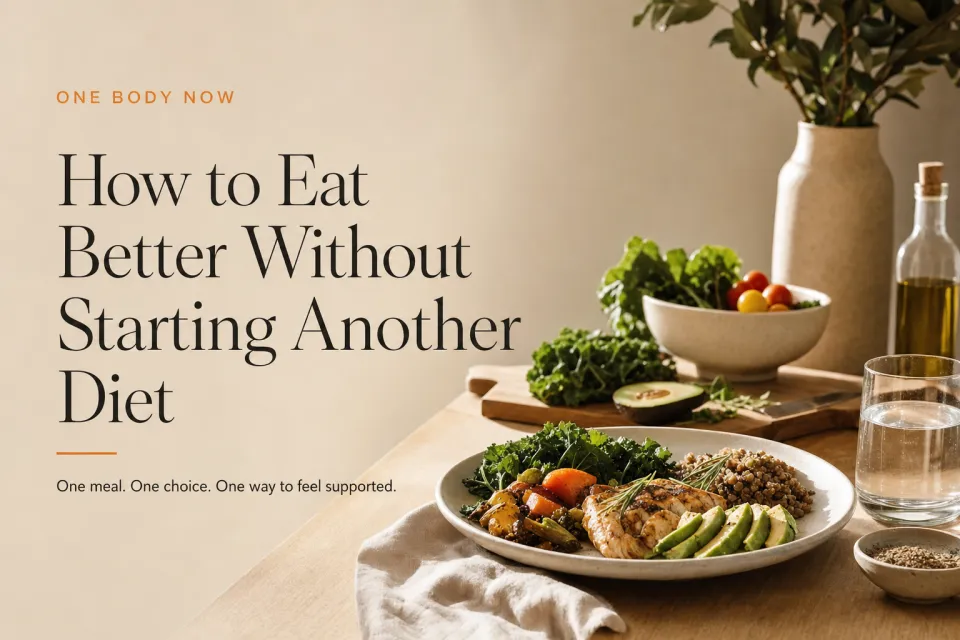
How to Eat Better Without Starting Another Diet
If the thought of “eating better” makes you feel tired before you even open the fridge, you are not alone. For many people, nutrition has become tangled with rules, pressure, tracking, restriction and the quiet feeling that they are somehow always behind. One week it is low carb. The next it is fasting. Then protein targets, meal plans, supplements, food timing, “perfect” breakfasts and lists of foods you are supposed to avoid forever.
But eating well does not have to begin with another diet. In fact, for many busy professionals, parents, leaders and real human beings with real schedules, the most sustainable path is much simpler: improve the next meal. Not the whole week. Not your entire identity. Not every choice from Monday morning onward. Just one meal that supports your energy, focus, satisfaction and consistency.
This guide is for anyone searching for how to eat better without dieting, especially if you want a calmer, more practical way to approach food. You may want better energy, steadier routines, easier decisions, improved body confidence or a more balanced relationship with meals. You may also be tired of starting again.
Here, nutrition is not treated as punishment. It is support. Food is not a test of discipline. It is one of the ways you care for your body in the middle of a full life.
What you will learn
- Why restrictive diets often create pressure, inconsistency and decision fatigue.
- How to build sustainable nutrition habits without obsessing over rules.
- A simple balanced plate framework you can use anywhere.
- How vegetables, fiber, protein, carbohydrates, fats and hydration support daily energy.
- Practical examples for breakfast, lunch, dinner, snacks, eating out and cravings.
- How to use the one meal habit to make healthy eating feel manageable.
- A gentle 7-day reset focused on improving one meal per day.
You do not need a perfect plan to begin. You need one meal that helps you feel supported now.
Why Eating Better Feels So Exhausting Today
Before we talk about how to eat better without dieting, it helps to understand why the idea feels so heavy for so many people. The problem is rarely a lack of care. Most people do care about their health, energy and daily habits. The challenge is that modern nutrition advice can feel like a crowded room where everyone is speaking at once.
Open your phone and you may find one expert telling you breakfast is essential, another saying to skip it, one promoting high fat, another promoting high carbohydrate, one warning against snacking, another encouraging frequent meals. Add work deadlines, family routines, travel, social meals and emotional stress, and eating well can start to feel like a full-time job.
The pressure to start over
Diet culture often frames nutrition as a dramatic reset. You are either “on track” or “off track.” You are either starting Monday or you have failed by Wednesday. This all-or-nothing mindset creates a cycle that many people know well:
- You feel uncomfortable, low in energy or frustrated with your habits.
- You decide to make a big change.
- You choose a plan with strict rules.
- You follow it intensely for a short time.
- Life gets busy, social or stressful.
- The plan becomes hard to maintain.
- You stop and feel like you have failed.
The issue is not that you lack motivation. The issue is that the system is too rigid for real life. A demanding workweek, a late meeting, a client dinner, a child waking at night or an airport meal should not collapse your entire approach to nutrition.
Information overload creates decision fatigue
Research in behavioral science consistently shows that humans have limited mental bandwidth for daily decision-making. When food choices require constant analysis, every meal becomes another decision under pressure. This is especially true for people with busy professional lives, hybrid schedules and irregular routines.
Instead of asking, “What would support me right now?” many people ask:
- Is this allowed?
- Is this too many carbs?
- Should I skip dinner because lunch was big?
- Is this healthy enough?
- Did I ruin the day?
These questions turn meals into mental negotiations. Over time, this can make nutrition feel less like self-care and more like self-monitoring.
A calmer starting point
The alternative is not to ignore nutrition. The alternative is to simplify it. Healthy eating without dieting begins by moving away from perfection and toward repeatable support. You do not need to rebuild your entire lifestyle overnight. You need a clear way to make your next meal a little more balanced, satisfying and useful for the life you are actually living.
That is why the one meal approach matters. It lowers pressure. It gives you a practical entry point. It turns nutrition from a long list of rules into a single question: What can I add to this meal that helps my body feel better supported?
Why Restrictive Diets Often Create Pressure and Inconsistency
Restrictive diets can feel appealing because they promise clarity. When life feels chaotic, a strict plan can seem comforting. Eat this. Avoid that. Follow these times. Use these portions. Do not think, just comply. But the same rigidity that creates short-term structure often creates long-term strain.
For many people searching for how to eat better without dieting, the real breakthrough is recognizing that consistency does not come from more control. It comes from habits that are flexible enough to survive normal life.
Restriction can increase preoccupation with food
When foods are placed into forbidden categories, they often become more mentally powerful. This is a common human response. If you tell yourself you can never eat bread, chocolate, pasta or dessert, those foods may become more distracting, not less. Instead of making eating easier, strict restriction can make certain choices feel emotionally charged.
This is one reason many diets lead to swings between control and overcorrection. A person may follow strict rules during the week, then feel pulled toward larger portions or impulsive choices when the rules become too tiring. The issue is not weakness. It is the natural response to a pattern that does not leave enough room for satisfaction, flexibility and social life.
Rigid plans often ignore context
A diet plan may look neat on paper, but your life is not paper. Your meals may be shaped by:
- Work meetings and unpredictable schedules.
- Travel days and airport options.
- Family preferences and shared meals.
- Budget, cooking skills and available time.
- Cultural foods and social occasions.
- Stress, tiredness and emotional load.
A sustainable approach to nutrition has to respect these realities. It should help you make better choices within your life, not require you to step outside your life to succeed.
Inconsistency often comes from unrealistic expectations
Many people believe they are inconsistent because they do not have enough discipline. In reality, they may be setting the bar too high. If your plan requires meal prepping every Sunday, cooking every dinner, avoiding every sweet food, never eating late and tracking every bite, it may work during a calm week. But most weeks are not calm.
A more realistic approach asks: what is the smallest useful improvement you can repeat?
Examples include:
- Adding protein to breakfast instead of skipping it.
- Including vegetables at lunch three times this week.
- Drinking water before your second coffee.
- Choosing a more filling afternoon snack.
- Ordering a balanced meal when eating out instead of trying to be perfect.
The goal is steadiness, not strictness
Strictness can create the appearance of progress, but steadiness creates a life you can maintain. Sustainable nutrition habits are built through repetition, not intensity. They become easier because they reduce friction. You begin to know what works for your body, what keeps you satisfied and what helps you feel clear during the day.
When you stop using food as a pass or fail system, you create room for learning. Every meal becomes information. What gave you energy? What left you hungry? What felt satisfying? What was convenient but not enough? This is a far more useful way to approach nutrition than simply asking whether you followed the rules.
Nutrition as Support, Not Punishment
A major shift in how to eat better without dieting is changing the emotional role of nutrition. Instead of treating food as something to control, earn or compensate for, you can begin to see it as support. This does not mean every meal must be optimized. It means food choices can help you feel more steady, satisfied and connected to your body.
Supportive nutrition is not about moral value. A salad is not virtuous. A pastry is not a failure. Meals are not personality tests. Food is simply food, and different choices serve different purposes at different moments.
Ask better questions
Diet thinking often asks questions that create pressure:
- How can I eat less?
- What should I cut out?
- How do I make up for yesterday?
- Is this bad?
- Did I ruin my progress?
Supportive nutrition asks more useful questions:
- What would help me feel satisfied for the next few hours?
- Can I add protein, fiber or color to this meal?
- Am I eating enough to support my day?
- What choice would feel calm and practical right now?
- How can I make this meal a little more balanced without making it complicated?
This shift matters because the quality of your questions shapes the quality of your choices. When you ask supportive questions, you create options rather than pressure.
Food can support energy and focus
Nutrition affects how you feel throughout the day in general ways. Meals that include protein, fiber-rich carbohydrates, healthy fats and hydration may help you feel more satisfied and maintain steadier energy than meals built mostly from quick-digesting foods alone. This does not mean every meal must be perfectly balanced. It simply means that structure can help.
For example, compare these two workday lunches:
- A plain pastry and coffee eaten quickly between calls.
- A grain bowl with chicken or lentils, vegetables, olive oil dressing and water.
Neither choice defines your health. But the second meal is more likely to provide a combination of protein, fiber, carbohydrates, fats and fluid that supports satiety and concentration for the afternoon. The lesson is not “never eat pastry.” The lesson is “notice what your body may need to feel supported.”
Support also includes pleasure
A nutrition approach that ignores pleasure is unlikely to last. Enjoyment, flavor, culture and comfort all matter. Many people abandon healthy eating plans because the food feels joyless or disconnected from their preferences. A supportive approach makes room for meals you genuinely enjoy while gently improving structure and quality.
That may mean:
- Adding roasted vegetables to a pasta dish you love.
- Choosing Greek yogurt with fruit and honey instead of skipping breakfast.
- Ordering the burger with a side salad because both satisfaction and balance matter.
- Keeping chocolate in your life without turning it into a secret or a struggle.
When nutrition supports your life, it becomes easier to repeat. You stop chasing a perfect version of eating and start building a kinder, more reliable rhythm.
Why One Improved Meal Beats a Perfect Plan
The most powerful starting point for healthy eating without dieting may be surprisingly small: improve one meal. This works because the next meal is immediate, concrete and manageable. A perfect plan lives in the future. One improved meal happens now.
Most people do not struggle because they lack big goals. They struggle because big goals are difficult to translate into daily action. “Eat healthier” is vague. “Add protein and vegetables to lunch today” is clear. The smaller action is less dramatic, but it is far more usable.
Small actions reduce resistance
When a change feels too large, your brain often looks for reasons to delay it. You may tell yourself you need to shop first, plan first, research first or wait until Monday. A one meal habit removes that barrier. You can begin with whatever meal is in front of you.
Examples of one meal improvements include:
- Adding eggs, yogurt or tofu to breakfast for more protein.
- Putting a handful of greens into a sandwich or wrap.
- Adding beans or lentils to soup.
- Choosing water with your meal.
- Adding fruit to an afternoon snack.
- Including a source of fat such as avocado, olive oil, nuts or seeds.
These are not dramatic transformations. That is the point. They are simple enough to repeat.
The next meal interrupts the all-or-nothing cycle
Many people abandon nutrition goals after one meal that feels “off plan.” But if your focus is one meal at a time, there is nothing to abandon. The next meal is always available. You do not have to compensate, restrict or start over. You simply return to support.
This is especially useful after travel, holidays, busy work periods or social meals. Instead of thinking, “I need to get back on track,” you can ask, “What would make my next meal feel more balanced?” That question is calmer, more practical and less loaded with judgment.
One meal creates evidence
Confidence grows from proof. Every time you improve one meal, you gather evidence that you can care for yourself without extreme rules. Over time, these small moments begin to change your identity. You become someone who knows how to build a supportive plate, order a satisfying lunch, pause before eating from stress, hydrate more often and return to balance without drama.
Real-world example: the busy HR director
Imagine Sophie, a senior People and Culture leader, moving between leadership meetings, employee conversations and late afternoon planning calls. She wants to eat better, but she does not have the space for complex meal prep or strict tracking.
Instead of starting a diet, she chooses one daily anchor: lunch. Her rule is not restrictive. It is supportive. At lunch, she aims for protein, vegetables or fruit, a satisfying carbohydrate and water. Some days that is a salmon salad with bread. Some days it is lentil soup and fruit. Some days it is a takeaway bowl with rice, vegetables and chicken. Within two weeks, she notices fewer frantic snack decisions in the afternoon. Not because her diet is perfect, but because one meal is more supportive.
This is the quiet power of the one meal habit. It changes the day without taking over the day.
The Simple Balanced Plate Framework for Eating Better Without Dieting
If you want to know how to eat better without dieting, the balanced plate is one of the simplest frameworks available. It gives you structure without turning food into math. You do not need to count every gram or follow a rigid template. You simply learn to include a few supportive elements most of the time.
A balanced plate generally includes vegetables or fruit, protein, whole or minimally processed carbohydrates, healthy fats and hydration. The exact portions can vary depending on your appetite, activity, culture, preferences and goals. The framework is not a rule. It is a guide.
1. Vegetables and fiber for volume and satisfaction
Vegetables, fruits, beans, lentils and whole grains provide fiber, texture, color and variety. Fiber can support fullness and digestive regularity for many people, and it often helps meals feel more complete. A simple goal is to add one colorful plant food to meals when possible.
Easy examples include:
- Spinach in eggs or a smoothie.
- Tomatoes and cucumber with lunch.
- Roasted carrots, peppers or courgettes at dinner.
- Beans added to soups, salads or rice bowls.
- Fruit with yogurt, oats or snacks.
2. Quality protein for satiety
Protein helps meals feel satisfying and supports normal body functions. Many people eat protein at dinner but forget it at breakfast or lunch, which can lead to hunger later in the day. You do not need to obsess over targets. Start by including a clear protein source in one meal.
Options include:
- Eggs, Greek yogurt, cottage cheese or kefir.
- Chicken, turkey, fish or lean meat.
- Tofu, tempeh, lentils, beans or chickpeas.
- Nuts, seeds and nut butters as supportive additions.
3. Carbohydrates for usable energy
Carbohydrates are often misunderstood. They are not automatically a problem. Many carbohydrate foods provide energy, fiber, minerals and satisfaction. The key is choosing carbohydrates that support your meal and your day.
Whole or minimally processed options include oats, potatoes, brown rice, quinoa, whole grain bread, pasta, beans, lentils and fruit. More refined options can also fit into life. The aim is not to ban foods. It is to notice which choices keep you satisfied and energized.
4. Healthy fats for flavor and fullness
Fats add flavor, texture and satisfaction. They can help a meal feel complete. Olive oil, avocado, nuts, seeds, tahini and oily fish are common examples. Because fats are energy-dense, a little can go a long way, but they should not be feared.
5. Hydration as a foundation
Hydration is one of the simplest simple nutrition tips, yet it is easy to overlook. Many people move through the day with coffee, meetings and screens, then realize they have barely had water. Dehydration can contribute to feeling sluggish or distracted for some people, so keeping water visible can be a practical support.
A balanced plate is not about perfection. It is a flexible structure that helps you build meals with less mental effort. Once you understand the pattern, you can apply it at home, in restaurants, at work, while traveling and during busy weeks.
Food Quality Without Calling Foods Good or Bad
One of the most important principles in how to eat better without dieting is learning to talk about food quality without turning food into morality. Food can be more or less nourishing in a specific context, but that does not make you good or bad for eating it.
This distinction matters. When people label foods as “bad,” they often attach guilt to eating. Guilt may feel motivating for a moment, but it rarely creates a peaceful or sustainable relationship with nutrition. A calmer approach looks at what a food offers, how often it appears, how it makes you feel and what else might support the meal.
Think in terms of function
Instead of asking whether a food is good or bad, ask what role it plays. A food might provide:
- Longer-lasting fullness.
- Quick energy.
- Comfort or pleasure.
- Convenience during a busy day.
- Protein, fiber, vitamins or minerals.
- Connection during a shared meal.
A croissant at a café with a friend may serve pleasure, culture and connection. A lentil bowl may serve satiety and steady energy. Both can exist in a healthy life. The skill is not choosing the “perfect” food every time. The skill is understanding what you need more often and how to create balance across the day.
Use “more often” and “sometimes” language
A helpful way to reduce food stress is to replace strict labels with frequency language. Some foods support your body well when eaten often. Other foods are enjoyable and fit best sometimes. This creates flexibility without pretending all choices affect you in the same way.
For example:
- Vegetables, fruits, beans, lentils and whole grains may be useful more often.
- Protein-rich foods may be useful at most meals.
- Sweets, fried foods and rich desserts can be enjoyed sometimes without drama.
- Convenience foods can be part of real life, especially when paired with supportive additions.
This language is especially helpful for families, teams and workplaces because it avoids shame. It teaches discernment, not fear.
Upgrade without overhauling
Food quality improves most easily through upgrades rather than total replacements. If you love pasta, you do not need to remove pasta. You might add vegetables and protein. If you enjoy sandwiches, you might choose whole grain bread sometimes, add salad and include a protein filling. If you rely on takeaway meals, you might choose bowls, soups, salads or grilled options more often.
Simple upgrades that work
- Add fruit to breakfast instead of changing the whole meal.
- Choose a higher-fiber bread when it fits your taste.
- Add beans to minced meat dishes, soups or stews.
- Keep washed vegetables ready for quick lunches.
- Pair a sweet snack with yogurt, nuts or fruit for more satisfaction.
These small changes improve food quality without creating a sense of restriction. Over time, they teach you that eating better is not about removing joy. It is about adding support.
Meal Structure: The Quiet Secret Behind Sustainable Nutrition Habits
Meal structure is one of the most underrated tools for healthy eating without dieting. Structure does not mean rigid rules. It means having enough rhythm in your day that meals do not become random, reactive or driven only by urgent hunger.
Many people blame themselves for evening overeating or constant snacking when the real issue began earlier. They skipped breakfast, rushed lunch, drank coffee instead of eating, then arrived at dinner physically hungry and mentally depleted. In that state, balanced choices become much harder.
Why structure supports better decisions
When you eat in a more predictable rhythm, your body and brain have fewer urgent decisions to manage. You are less likely to reach the point where anything fast becomes the only option. For many people, a simple rhythm of meals and planned snacks supports steadier energy and calmer choices.
This does not mean everyone needs the same schedule. Some people enjoy breakfast early. Others prefer a later first meal. Some need snacks. Others do not. The goal is to find a pattern that helps you feel functional, satisfied and less reactive.
Signs your meal structure may need support
- You often forget to eat until you are extremely hungry.
- You rely on coffee to push through meals.
- You snack continuously but rarely feel satisfied.
- You feel unfocused or irritable in the afternoon.
- You arrive at dinner feeling out of control around food.
- You make most food decisions at the last possible moment.
If these patterns sound familiar, the solution is not necessarily stricter discipline. It may be more reliable nourishment earlier in the day.
A flexible meal structure for busy days
A simple workday structure might look like this:
- Morning: A protein-containing breakfast or first meal, such as yogurt with fruit, eggs with toast, tofu scramble or oats with nuts.
- Midday: A balanced lunch with protein, vegetables or fruit, carbohydrates and water.
- Afternoon: A planned snack if needed, such as fruit with nuts, hummus with vegetables, cheese with whole grain crackers or yogurt.
- Evening: A satisfying dinner built around the balanced plate framework.
This is not a prescription. It is a starting template. The right structure is the one that fits your life and reduces the number of moments where you feel forced into choices by hunger, stress or lack of planning.
Case example: the 3 pm energy dip
Consider someone who eats a small breakfast, has a desk lunch of coffee and a snack bar, then feels exhausted by 3 pm. They may think they need more willpower. In reality, they may need a better lunch. Adding protein, fiber and hydration at midday could make the afternoon feel easier.
The lesson is simple: your later choices are often shaped by earlier meals. When you support yourself earlier, you reduce the need to fight yourself later.
Practical Examples for Breakfast, Lunch, Dinner, Snacks and Eating Out
Understanding nutrition principles is useful, but real life happens in specific meals. That is why practical examples matter. If you are learning how to eat better without dieting, your goal is not to memorize theory. It is to know what to do when you are standing in the kitchen, opening a delivery app or walking into a restaurant.
Breakfast examples
Breakfast does not need to be elaborate. The most helpful question is: can this first meal keep me satisfied for a reasonable stretch of the day?
- Greek yogurt bowl: Greek yogurt, berries, banana, nuts or seeds and a little honey.
- Eggs and toast: Eggs with whole grain toast, tomatoes and avocado.
- Oats: Oats with milk or fortified plant milk, fruit, cinnamon and nut butter.
- Savory toast: Hummus or cottage cheese on toast with cucumber and olive oil.
- Quick option: A protein smoothie with fruit, yogurt or tofu, oats and nut butter.
Lunch examples
Lunch is often the meal that determines the quality of the afternoon. A balanced lunch does not need to be perfect. It simply needs enough structure to support energy and satiety.
- Grain bowl: Rice or quinoa, chicken or tofu, vegetables, olive oil dressing and seeds.
- Soup plus side: Lentil soup with bread and fruit.
- Sandwich upgrade: Whole grain bread, turkey or hummus, salad, tomato and a side of fruit.
- Leftovers: Dinner leftovers with extra greens or beans added.
- Takeaway: A bowl with protein, vegetables, carbohydrates and sauce on the side if preferred.
Quick dinner examples
Dinner is often where people feel pressure to cook something impressive. But a supportive dinner can be simple.
- Egg plate: Omelet with vegetables, toast and salad.
- Pasta plus: Pasta with tomato sauce, tuna or lentils, spinach and olive oil.
- Tray meal: Roasted vegetables, potatoes and salmon, tofu or chicken.
- Wraps: Whole grain wraps with beans, avocado, salsa and salad.
- Freezer support: Frozen vegetables, microwavable grains and a protein source.
Snack examples
A snack is not a failure. It can be a useful bridge between meals. A more satisfying snack often includes protein, fiber or fat.
- Apple with peanut butter.
- Yogurt with berries.
- Hummus with carrots and crackers.
- A boiled egg with fruit.
- Nuts with a piece of dark chocolate.
Eating out without dieting
When eating out, avoid turning the menu into a moral exam. Instead, use the balanced plate as a loose guide. Choose something you enjoy, then look for support.
- Add a side salad or vegetables.
- Include a protein source.
- Choose a carbohydrate you actually want.
- Drink water alongside wine, coffee or soft drinks.
- Eat slowly enough to notice satisfaction.
This approach keeps meals social, enjoyable and grounded. You are not trying to control every variable. You are practicing calm, flexible balance.
Mindful Eating Without Turning Meals Into a Project
Mindful eating is often misunderstood. It does not mean eating in silence, chewing a certain number of times or turning every lunch into a meditation. At its best, mindful eating simply means bringing enough attention to a meal that you can notice hunger, satisfaction, taste, pace and how the food feels in your body.
For anyone exploring how to eat better without dieting, mindful eating can be a powerful alternative to external rules. Instead of asking a plan what you are allowed to eat, you begin listening to your body with more curiosity and less judgment.
Start with a pause
The simplest mindful eating practice is a short pause before eating. This can take ten seconds. Before the first bite, ask:
- How hungry am I?
- What do I need from this meal?
- Am I eating quickly because I am stressed?
- Can I sit down, even briefly?
- What would help this meal feel more satisfying?
This pause is not designed to stop you from eating. It is designed to help you arrive at the meal.
Notice satisfaction, not just fullness
Many people eat past fullness because the meal did not feel satisfying. Satisfaction includes flavor, texture, temperature, variety and emotional enjoyment. A large bowl of plain leaves may be physically voluminous but not satisfying. A balanced plate with protein, fiber, carbohydrates, fat and flavor may feel more complete.
Practical ways to increase satisfaction include:
- Add herbs, spices, citrus, sauces or dressings.
- Include different textures, such as crunchy vegetables and creamy hummus.
- Choose carbohydrates you enjoy rather than avoiding them and feeling deprived.
- Use enough fat for flavor, such as olive oil, tahini, avocado or nuts.
- Eat from a plate or bowl when possible, rather than directly from packaging.
Slow down without being unrealistic
Not every meal can be slow. Some lunches happen between calls. Some breakfasts happen while preparing children for school. The goal is not perfection. It is to create small moments of attention where possible.
Try one of these:
- Take three slower breaths before eating.
- Put your phone down for the first few bites.
- Notice the flavor of the meal before deciding if you need more.
- Pause halfway and ask whether you are still hungry.
- End the meal with water and a moment of closure.
Mindful eating helps you become a participant in your meals, not just a person reacting to hunger, stress or convenience. It is a gentle skill, and like all skills, it develops through repetition.
Cravings, Emotional Eating and the Calm Middle Ground
Cravings are not evidence that you are failing. They are normal human experiences. Sometimes they are physical, caused by hunger, tiredness or under-eating. Sometimes they are emotional, connected to stress, boredom, celebration, sadness or the need for comfort. Sometimes a craving is simply a desire for pleasure.
Learning how to eat better without dieting means learning to respond to cravings without panic. You do not need to obey every craving instantly, and you do not need to fight every craving either. There is a calm middle ground.
Check the basics first
Before judging a craving, ask whether your body has been supported today. Many intense cravings appear after long gaps without food, low protein meals, low fiber intake or poor hydration. If you have eaten very little all day, craving quick energy in the evening is not a character flaw. It may be a predictable response.
Use this quick check:
- Have I eaten enough today?
- Did my last meal include protein?
- Have I had vegetables, fruit or other fiber-rich foods?
- Have I had water?
- Am I tired, stressed or overstimulated?
Sometimes the answer is to eat the food you are craving. Sometimes the answer is to eat a proper meal first. Sometimes it is to pair the craving with something more satisfying.
Use the add-on approach
Instead of saying, “I cannot have that,” try asking, “What can I add so this feels more supportive?”
Examples:
- If you want chocolate, have it with yogurt or fruit.
- If you want crisps, put them in a bowl and add a sandwich or protein snack if you are hungry.
- If you want pasta, add protein and vegetables rather than shrinking the portion until it feels unsatisfying.
- If you want dessert, enjoy dessert after a balanced meal rather than eating it while overly hungry.
This reduces the sense of scarcity that often fuels overeating. It also teaches you that cravings can be included without becoming the entire meal.
Emotional eating needs compassion
Food is emotional because humans are emotional. We celebrate with food, connect through food and comfort ourselves with food. The goal is not to remove emotion from eating. The goal is to expand your options.
If you notice that you often eat in response to stress, try adding a short question before the snack or meal:
What am I asking this food to do for me right now?
The answer may be comfort, distraction, energy, pleasure or pause. Once you know the need, you can choose more consciously. You may still eat. You may also send a message to a friend, step outside for two minutes, make tea or prepare a more satisfying meal.
Cravings become easier to navigate when they are not treated as emergencies. They are signals. You can listen without surrendering your sense of choice.
Nutrition for Energy During Busy Workdays
Many people begin looking for simple nutrition tips because their energy feels unpredictable. They start the morning with coffee, push through meetings, grab something quick, then feel tired, distracted or snack-driven later in the day. While nutrition is only one part of energy, meal choices can support a steadier rhythm.
The goal of nutrition for energy is not to engineer a perfect day. It is to reduce avoidable dips caused by under-eating, unbalanced meals or long gaps without nourishment.
Build meals that last longer
Meals built mostly around quick-digesting carbohydrates, such as pastries, sweets or sugary drinks, may provide short-term energy but may not keep you satisfied for long. Adding protein, fiber and fat can help the meal feel more stable.
For example:
- Instead of toast alone, try toast with eggs, avocado or cottage cheese.
- Instead of coffee only, add yogurt with fruit or oats.
- Instead of a plain salad, add chicken, beans, tofu, grains, olive oil or seeds.
- Instead of crackers alone, add hummus, cheese or nut butter.
These additions do not make the meal morally better. They make it more supportive.
Plan for the afternoon before it arrives
The afternoon is where many workday nutrition patterns unravel. Decision fatigue is high, meetings are stacked and hunger may be building. A planned snack can prevent the feeling of emergency eating.
Useful office or remote-work snacks include:
- Fruit and nuts.
- Greek yogurt or a plant-based protein yogurt.
- Whole grain crackers with hummus.
- Boiled eggs.
- Roasted chickpeas.
- A small sandwich or wrap if dinner will be late.
Hydration and caffeine rhythm
Coffee can be enjoyable and useful for many people, but it often replaces food and water. If you rely on coffee to suppress hunger or extend your work blocks, your energy may feel more fragile later.
A simple practice is to pair coffee with water and, when needed, actual food. For example, before the second coffee of the day, drink a glass of water and check whether you are hungry. This small habit can improve awareness without requiring restriction.
Real-world example: the meeting-heavy day
Imagine a day with back-to-back calls from 10 am to 3 pm. Without planning, lunch becomes whatever is closest. With a small amount of structure, the day changes. You might prepare a lunch bowl the night before, order a balanced meal before meetings begin or keep a snack ready for the transition between calls.
The practical lesson is that energy is easier to support before you are depleted. Nutrition works best when it is proactive, not only reactive.
Shopping and Meal Prep Without Losing Your Weekend
Meal prep has a reputation for being intense: rows of identical containers, hours in the kitchen and a Sunday routine that feels like another job. But meal preparation does not need to be that rigid. If you are learning how to eat better without dieting, the goal is not to control every meal in advance. The goal is to make supportive choices easier when life gets busy.
Think of meal prep as reducing friction. You are not preparing perfection. You are preparing options.
Use the “building blocks” method
Instead of cooking complete meals for the entire week, prepare a few flexible building blocks. These can be mixed into different combinations depending on appetite and schedule.
Useful building blocks
- Proteins: Boiled eggs, grilled chicken, baked tofu, lentils, beans, tuna, smoked salmon, Greek yogurt.
- Carbohydrates: Cooked rice, quinoa, potatoes, oats, whole grain bread, wraps.
- Vegetables: Washed salad leaves, roasted vegetables, chopped cucumbers, tomatoes, frozen vegetables.
- Fats and flavor: Olive oil dressing, hummus, tahini, avocado, nuts, seeds, pesto.
- Quick extras: Fruit, herbs, lemon, spices, yogurt sauces, pickled vegetables.
With these ready, you can build bowls, wraps, salads, plates, soups and quick breakfasts with far less effort.
Create a supportive grocery list
A useful grocery list is not a diet list. It is a decision-support tool. It helps you avoid reaching the end of a long day with nothing available except random snacks.
Try organizing your list by the balanced plate framework:
- Fiber and color: Vegetables, fruit, beans, lentils, whole grains.
- Protein: Eggs, yogurt, tofu, fish, chicken, legumes or other preferred sources.
- Carbohydrates: Oats, rice, potatoes, bread, pasta, grains.
- Fats: Olive oil, nuts, seeds, avocado, tahini.
- Hydration: Sparkling water, herbal tea, lemon, cucumber or mint if these help you drink more.
Plan for your real week
A common mistake is shopping for an ideal version of yourself. You buy ingredients for elaborate meals, then your week becomes busy and the food goes unused. A better approach is to plan for your actual calendar.
Ask:
- How many nights will I realistically cook?
- Which days need a very quick dinner?
- Do I need portable lunches?
- What snacks would prevent rushed choices?
- What can I keep in the freezer for backup?
When your food environment supports your real life, sustainable nutrition habits become much easier. You are no longer relying on motivation at the hardest moments. You have made the supportive choice more available.
Introducing the One Meal Habit
The one meal habit is the calmest practical answer to how to eat better without dieting. Instead of trying to change your entire diet at once, you choose one meal per day to improve. This creates focus, reduces overwhelm and builds trust through repetition.
The meal you choose can depend on your life. For some people, breakfast is the best anchor because it sets the tone early. For others, lunch is the most strategic because it affects afternoon energy. For some, dinner is the most realistic because it is the meal they can influence most.
How to choose your one meal
Pick the meal that gives you the highest return with the lowest resistance. This is usually the meal that currently feels most chaotic or the meal that is easiest to improve.
Consider these options:
- Choose breakfast if you often start the day with coffee only and feel hungry later.
- Choose lunch if your afternoon energy dips or you snack through the workday.
- Choose dinner if evenings feel rushed, random or overly dependent on takeaway.
- Choose snacks if you often feel caught between meals without satisfying options.
What counts as an improved meal?
An improved meal is not a perfect meal. It is simply a meal that offers more support than your default. That might mean more protein, more fiber, more hydration, more color, more satisfaction or more structure.
Examples include:
- Adding fruit and nuts to yogurt.
- Adding chickpeas to a salad.
- Adding vegetables to a takeaway meal.
- Adding water to a coffee-heavy morning.
- Adding a protein source to pasta.
- Adding a planned snack before a late dinner.
Notice the repeated word: adding. The one meal habit works best when it begins with support, not subtraction.
A simple companion for decision fatigue
If you want a practical tool to make this easier, One Meal Now is designed around the idea that one meal can become the starting point. It helps simplify meal awareness and reduce decision fatigue without turning eating into a strict diet plan.
This reflects the broader One Body Now philosophy: small daily actions can reconnect you with your body in a realistic way. Nutrition does not need to be dramatic to matter. One meal, repeated with care, can change the rhythm of your day.
A 7-Day Reset Based on One Improved Meal Per Day
A reset does not need to mean restriction. In this guide, a reset means returning to simple supportive actions. This 7-day plan is not a diet, challenge or test. It is a gentle way to practice how to eat better without dieting by improving one meal each day.
Use the plan as written or adapt it to your schedule. The purpose is to learn, not perform.
Day 1: Add protein to breakfast
Choose a breakfast or first meal with a clear protein source. Try eggs, Greek yogurt, tofu, cottage cheese, protein-rich plant yogurt, smoked salmon or beans. Keep the rest simple.
Example: Greek yogurt with berries, oats and walnuts.
Day 2: Add color to lunch
Add at least one vegetable or fruit to your lunch. This could be salad leaves, roasted vegetables, tomatoes, cucumber, carrots, peppers, soup or fruit on the side.
Example: Chicken or chickpea wrap with salad, plus an apple.
Day 3: Upgrade your hydration
Place water where you can see it. Drink a glass with one meal and one glass between meals. If plain water feels dull, add lemon, mint, cucumber or choose sparkling water.
Example: Water with lunch before your afternoon coffee.
Day 4: Build a balanced dinner
Use the balanced plate framework: protein, vegetables, carbohydrates, fats and water. Do not aim for perfect portions. Aim for presence of each element.
Example: Salmon, potatoes, greens, olive oil dressing and water.
Day 5: Plan one satisfying snack
Choose a snack that includes protein, fiber or fat. This is especially useful if dinner will be late or your afternoon tends to feel rushed.
Example: Apple with peanut butter or hummus with crackers.
Day 6: Practice eating out with balance
Choose a meal you genuinely want. Then add support where possible. Include protein, add vegetables or salad, drink water and eat with attention.
Example: Pasta with seafood or lentils, side salad and water.
Day 7: Reflect and repeat
Look back at the week. Which one improved meal made the biggest difference? Which felt easiest? Which would you repeat next week?
Example reflection: “Lunch helped my afternoon most. I will focus on balanced lunches three days next week.”
This reset works because it does not ask you to become a different person. It asks you to practice one supportive choice at a time.
Expert Tips and Pro Strategies for Eating Better Without Dieting
Once the basics feel familiar, you can refine your approach. These strategies are especially useful if you already understand balanced meals but struggle with consistency, busy schedules or decision fatigue.
Use anchor meals
An anchor meal is a reliable meal you repeat often because it works. It removes decision-making and gives your day structure. This is not boring. It is efficient.
Examples include:
- Yogurt, fruit and nuts for breakfast.
- A grain bowl for lunch.
- Eggs, toast and vegetables for a quick dinner.
- Soup, bread and fruit on busy days.
Choose two or three anchor meals you enjoy and keep the ingredients available.
Think “protein plus produce” when in doubt
If you are overwhelmed, simplify the decision. Ask: where is the protein, and where is the produce? This quick filter improves many meals without requiring detailed tracking.
For example, if lunch is a sandwich, add chicken, tuna, tofu, hummus or cheese, then add salad or fruit. If dinner is pasta, add lentils, fish or chicken, then add vegetables.
Avoid the compensation trap
One of the most common mistakes is eating less after a larger or richer meal to “make up for it.” This often leads to more hunger and stronger cravings later. Instead, return to normal supportive meals. Your body does not need punishment. It needs rhythm.
Use your environment
Make supportive foods visible and convenient. Keep fruit on the counter, washed vegetables at eye level, water on your desk and protein options easy to reach. Environment often beats willpower.
Recommended tools and resources
- A simple notes app: Save three breakfasts, three lunches and three dinners that work for you.
- A reusable water bottle: Keep hydration visible during the workday.
- A grocery template: Organize shopping by protein, color, carbohydrates, fats and snacks.
- The Journal: Explore practical wellness reflections in The Journal by One Body Now.
- Simple meal awareness: Use One Meal Now when you want a calm companion for building meal habits without dieting.
The advanced strategy is not more complexity. It is better simplicity. The more repeatable your nutrition system becomes, the less emotional effort it requires.
Step-by-Step Checklist: How to Eat Better Without Dieting This Week
Use this checklist when you want clear action without starting another plan. Each step is small, practical and designed to support real life.
- Choose one meal to improve.
- Pick breakfast, lunch, dinner or snacks. Choose the meal where a small change would make the biggest difference.
- Add one protein source.
- Use eggs, yogurt, tofu, fish, chicken, beans, lentils, cottage cheese or another option you enjoy.
- Add one fiber-rich food.
- Choose vegetables, fruit, beans, lentils, oats, whole grains or potatoes with skin.
- Include a satisfying carbohydrate.
- Try rice, bread, oats, pasta, potatoes, quinoa, fruit or another carbohydrate that fits the meal.
- Add flavor and healthy fat.
- Use olive oil, avocado, nuts, seeds, tahini, pesto or dressing. Enjoyment helps consistency.
- Drink water with the meal.
- Keep it simple. One glass is enough to begin.
- Pause before eating.
- Take ten seconds to notice hunger, pace and what you need from the meal.
- Reflect without judgment.
- Ask what worked. Did the meal support your energy, satisfaction or focus? Use the answer as information.
Pro tip: If a step feels too big, make it smaller. One piece of fruit, one glass of water or one added protein is still progress.
Conclusion: The Next Meal Matters More Than the Perfect Plan
Eating better does not have to begin with another diet. You do not need a stricter plan, a complete kitchen overhaul or a perfect Monday morning. You need one supportive choice, repeated often enough to become familiar.
If you remember only a few ideas from this guide, let them be these:
- Nutrition is support, not punishment.
- Balanced meals can be simple: protein, fiber, carbohydrates, fats and hydration.
- Food is not good or bad. Different choices serve different roles.
- One improved meal can interrupt the all-or-nothing cycle.
- Sustainable nutrition habits are built through repetition, not restriction.
The next meal is always a chance to return to yourself. Not with guilt. Not with pressure. Not with another set of rules. With care.
You do not need to fix your whole diet today. Start with one meal that supports you. One Body Now helps you build from there.
Frequently Asked Questions
What is the best way to eat better without dieting?
The best way to eat better without dieting is to focus on small, repeatable improvements rather than strict rules. Start with one meal per day and add support: a protein source, vegetables or fruit, a satisfying carbohydrate, healthy fat and water. This approach helps you build balanced meals without counting, restricting or labeling foods as good or bad. It also reduces the pressure that often causes people to abandon nutrition goals. The aim is not perfection. The aim is to make your next meal more supportive than your default choice.
Can I lose weight without starting a diet?
Some people may experience weight changes when they build more consistent, balanced eating habits, but weight loss should not require extreme restriction or guilt. A non-diet approach focuses on meals that support satiety, energy and regular routines. This may include more protein, fiber-rich foods, hydration and mindful eating. It also helps reduce the all-or-nothing cycle that often leads to inconsistency. If weight loss is a personal goal, it is wise to approach it gently and, when needed, work with a qualified professional who can consider your individual health, history and needs.
What should a balanced meal include?
A balanced meal usually includes a source of protein, vegetables or fruit, a carbohydrate, healthy fat and fluid. For example, a lunch bowl might include rice, chicken or tofu, roasted vegetables, olive oil dressing and water. A breakfast might include yogurt, fruit, oats and nuts. The portions do not need to be perfect. The framework simply helps you create meals that are more satisfying and supportive. Balanced meals are flexible and can be adapted for different cultures, preferences, budgets, appetites and schedules.
Do I need to count calories to eat better?
No, you do not need to count calories to eat better. Some people find tracking useful in specific contexts, but many people find it stressful or difficult to maintain. You can improve nutrition by focusing on meal structure, food quality, mindful eating and consistency. Adding protein, fiber, color, healthy fats and hydration can make meals more satisfying without requiring detailed tracking. If counting leads to anxiety, guilt or obsession, a simpler plate-based approach may be a more supportive option.
How can I stop feeling guilty about food?
Food guilt often comes from labeling foods as good or bad. A calmer approach is to think about food in terms of function and frequency. Some foods support energy and fullness more often, while others provide pleasure, convenience or connection. Eating dessert, bread or takeaway does not mean you have failed. Instead of asking, “Was this bad?” ask, “What did this meal provide, and what might support me next?” Returning to balanced meals without punishment helps rebuild trust and reduces the emotional charge around eating.
What is the one meal habit?
The one meal habit is the practice of improving one meal per day instead of trying to change your entire diet at once. You choose one meal, such as breakfast, lunch or dinner, and add one or more supportive elements. That might be protein, vegetables, fruit, water, fiber or a more satisfying carbohydrate. The habit works because it is simple, immediate and realistic. Over time, one improved meal builds confidence, reduces overwhelm and creates a foundation for sustainable nutrition habits.
How do I eat healthy when I am busy?
When you are busy, healthy eating works best when it is simple and prepared for real life. Keep easy building blocks available, such as yogurt, eggs, cooked grains, canned beans, washed vegetables, fruit, hummus, frozen vegetables and ready proteins. Choose anchor meals you can repeat without much thought. For example, yogurt with fruit for breakfast, a grain bowl for lunch or eggs with toast and vegetables for dinner. The goal is not elaborate cooking. The goal is reducing friction so supportive meals are easier to choose.
Are carbohydrates bad for eating better?
No, carbohydrates are not bad. Carbohydrates can provide energy, satisfaction and important nutrients, especially when they come from foods such as oats, potatoes, rice, whole grain bread, beans, lentils, fruit and pasta. The key is context and balance. A carbohydrate-rich meal may feel more satisfying and steady when paired with protein, fiber and healthy fat. Instead of avoiding carbohydrates, notice which types and combinations help you feel energized and satisfied. A non-diet approach includes carbohydrates without fear.
How can I handle cravings without restriction?
Start by checking whether you have eaten enough, had protein, included fiber and stayed hydrated. Cravings often become stronger when meals have been too small or unbalanced. Then decide calmly how to respond. You might enjoy the craved food, pair it with something satisfying or eat a balanced meal first if you are very hungry. Avoid turning cravings into a battle. They are normal signals, not failures. The goal is to keep choice and awareness, rather than swinging between strict avoidance and feeling out of control.
What are simple nutrition tips I can start today?
Start with one glass of water, one protein source and one colorful plant food at your next meal. These three actions are simple but powerful. For example, add eggs to toast, fruit to yogurt, beans to soup, vegetables to pasta or water alongside lunch. You can also prepare one satisfying snack for the afternoon, such as fruit with nuts or hummus with crackers. Small actions work because they are repeatable. You do not need to change everything today to begin eating in a more supportive way.
How do I eat better when eating out?
Use the balanced plate as a loose guide, not a strict rule. Choose something you actually want, then add support where possible. Look for a protein source, include vegetables or salad, choose a satisfying carbohydrate and drink water with the meal. If you want dessert, enjoy it without turning the meal into a failure. Eating out is part of a normal life, and a sustainable nutrition approach must include social meals. The aim is balance, satisfaction and flexibility, not perfection.
How long does it take to build sustainable nutrition habits?
There is no exact timeline, because habits depend on your schedule, environment, preferences and starting point. Many people notice that one improved meal feels easier within a week or two, but deeper consistency takes practice. The key is repetition without self-criticism. Choose one habit, repeat it often, learn from it and adjust. A sustainable habit is not something you force perfectly. It is something that becomes easier because it fits your real life and supports how you want to feel.
Quotes & Books
Quotes for “How to Eat Better Without Starting Another Diet”
“Eat food. Not too much. Mostly plants.”Michael Pollan, In Defense of Food“Make food choices that honor your health and taste buds while making you feel good.”Evelyn Tribole and Elyse Resch, Intuitive Eating“Normal eating is going to the table hungry and eating until you are satisfied.”Ellyn Satter, registered dietitian and author“When you eat mindfully, you are aware of the food on your plate and the process of eating.”Jan Chozen Bays, Mindful Eating
Recommended Books
- Intuitive Eating by Evelyn Tribole and Elyse Resch
- A foundational book for moving away from dieting and rebuilding trust with your body. It introduces principles like honoring hunger, respecting fullness, rejecting diet mentality, and practicing “gentle nutrition.”
- In Defense of Food by Michael Pollan
- A practical and memorable guide to eating better without obsessing over nutrients, calories, or diet rules. Pollan’s simple philosophy encourages real food, moderation, and plant-forward meals.
- Gentle Nutrition by Rachael Hartley
- This book helps readers care about nutrition without falling into restriction or guilt. It focuses on flexible, satisfying eating habits that support health while leaving room for pleasure.
- Mindful Eating by Jan Chozen Bays
- A thoughtful guide to slowing down, paying attention to hunger and fullness, and creating a calmer relationship with food. It is especially useful for people who want to stop eating on autopilot.
- The Foodist by Darya Pino Rose
- A habit-based approach to eating well without traditional dieting. Rose emphasizes building a healthy lifestyle through small, sustainable routines rather than relying on willpower or strict meal plans.
- Secrets of Feeding a Healthy Family by Ellyn Satter
- A practical resource on developing a relaxed, competent approach to eating. Satter’s work is especially helpful for families, but her ideas about structure, satisfaction, and normal eating apply broadly.
Quotes for “How to Eat Better Without Starting Another Diet”
“Eat food. Not too much. Mostly plants.”
Michael Pollan, In Defense of Food
“Make food choices that honor your health and taste buds while making you feel good.” Evelyn Tribole and Elyse Resch, Intuitive Eating
“Normal eating is going to the table hungry and eating until you are satisfied.”
Ellyn Satter, registered dietitian and author
“When you eat mindfully, you are aware of the food on your plate and the process of eating.”
Jan Chozen Bays, Mindful Eating
Recommended Books
- Intuitive Eating by Evelyn Tribole and Elyse Resch
A foundational book for moving away from dieting and rebuilding trust with your body. It introduces principles like honoring hunger, respecting fullness, rejecting diet mentality, and practicing “gentle nutrition.” - In Defense of Food by Michael Pollan
A practical and memorable guide to eating better without obsessing over nutrients, calories, or diet rules. Pollan’s simple philosophy encourages real food, moderation, and plant-forward meals. - Gentle Nutrition by Rachael Hartley
This book helps readers care about nutrition without falling into restriction or guilt. It focuses on flexible, satisfying eating habits that support health while leaving room for pleasure. - Mindful Eating by Jan Chozen Bays
A thoughtful guide to slowing down, paying attention to hunger and fullness, and creating a calmer relationship with food. It is especially useful for people who want to stop eating on autopilot. - The Foodist by Darya Pino Rose
A habit-based approach to eating well without traditional dieting. Rose emphasizes building a healthy lifestyle through small, sustainable routines rather than relying on willpower or strict meal plans. - Secrets of Feeding a Healthy Family by Ellyn Satter
A practical resource on developing a relaxed, competent approach to eating. Satter’s work is especially helpful for families, but her ideas about structure, satisfaction, and normal eating apply broadly.